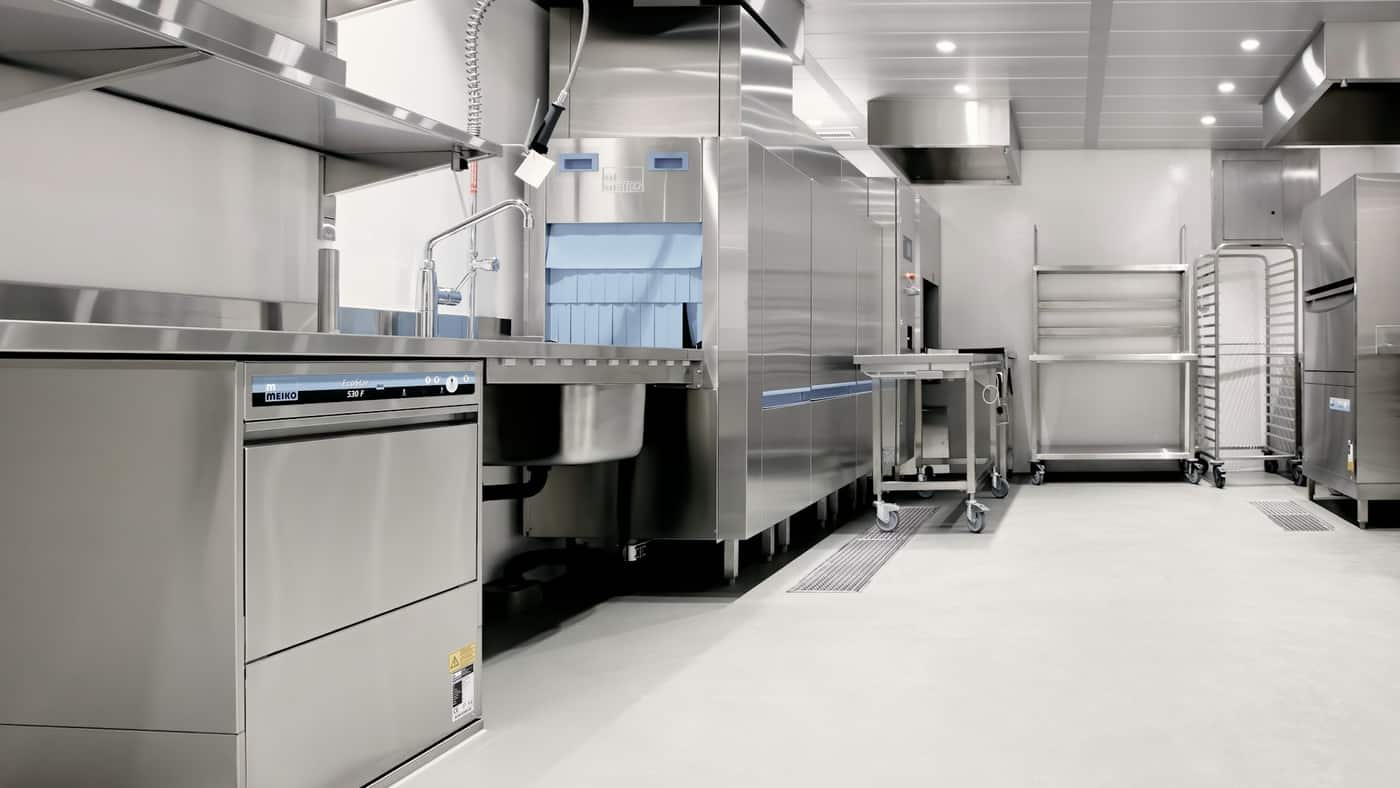
Commercial appliance repair in Minneapolis, MN
Minneapolis packs hotel kitchens, basement dining rooms, brewery taprooms, campus cafeterias and corner laundries into old brick and new towers. We repair the equipment inside them where it sits.
Do you repair commercial appliances in Minneapolis?
Yes. We repair commercial refrigeration, ice machines, cooking equipment, dishwashers, laundry machines and food prep equipment on site in Minneapolis, from downtown towers and North Loop warehouses to Northeast taprooms, Uptown restaurants and Lake Street shops. You get a diagnosis and a written price before work starts.
Commercial kitchens and laundries in Minneapolis
Minneapolis is a city of very different buildings. A downtown tower can hold a food hall, a hotel kitchen and a skyway cafe stacked within a few floors of each other, while a few miles away a 1920s brick storefront runs a full line out of a basement. The equipment is the same families of machines, but how we reach it, and how long a repair takes, changes block by block. That is why a first call is mostly about where the unit sits and what is in the way.
Most calls we expect here start with cold and heat: a walk-in cooler that will not hold temperature, an ice machine that quit making ice before a weekend, a fryer or range that will not light. The restaurants of the city generate the volume, but the hotels, taprooms, hospital and campus kitchens and laundromats each bring their own failure patterns, which the districts below describe one at a time. Cold storage, ice and dish machines are the usual suspects, and we would rather learn the access details on the phone than discover them at the door with a compressor in hand.
Where the equipment is in Minneapolis
- Downtown and the skyway level
Office towers, hotel kitchens, convention-area catering and food-court counters sit above and below street level. Freight elevators are shared and often booked, loading docks have set windows, and a tech may carry tools through a skyway. Tell us the dock, the floor and who signs us in before we arrive.
- North Loop and the Warehouse District
Converted brick warehouses hold restaurants and bars with tight prep lines, rooftop condensers and cellar storage. Cobblestone and alley delivery routes make parking slow on busy evenings. Ice machines and under-bar coolers working hard on summer weekends are the usual calls, and a daytime visit before prep starts is easiest.
- Northeast and the Arts District
Taprooms, breweries, bakeries and neighborhood bars fill former industrial buildings and old storefronts along Central Avenue and the streets around it. Glycol and draft lines, glass frosters, and cold rooms built into old spaces are common. Floors are often uneven and service doors are in the alley.
- Uptown and Lyn-Lake
Dense restaurants, cafes and bars share older buildings with apartments upstairs. Kitchens are small, condensing units sit on roofs or in tight rear stairwells, and summer patio traffic pushes ice machines and bar coolers hard. Loading is usually from the alley or a metered curb, so a quick call ahead helps.
- Eat Street on Nicollet Avenue
The restaurant blocks of Nicollet south of downtown are lined with independent kitchens, bakeries and groceries in older commercial buildings. Heavy daily cooking means fryer, range, steamer and dishwasher wear, and many walk-ins were fitted into odd corners. Basement storage with narrow stairs is common.
- Dinkytown and the University of Minnesota
Student-oriented cafes, pizza counters and bars cluster by the campus, and the university runs dining halls, labs and medical facilities of its own. Demand swings with the semester, so breakdowns land hard in September and during game weekends. Small shops lean on reach-ins, prep tables and countertop equipment.
- Lake Street and the south-side corridors
Lake Street and the avenues crossing it hold family restaurants, panaderias, taquerias, grocers, meat counters and a good number of laundromats. Display cases, walk-ins and commercial washers and dryers run long hours here. Many buildings have shared utilities, so we confirm water and gas shutoffs with the operator first.
- The stadium district and Downtown East
Event days at US Bank Stadium, Target Center and Target Field, and in the hotels around them, create sudden spikes in demand for ice, cold drinks and fast cooking. Concession and bar equipment is serviced best on non-event days. Access depends on event schedules, so confirm gates and credentials before we show up.
- Hospital, medical and Midtown areas
Large medical campuses and the Midtown corridor combine institutional kitchens, cafeterias, laundry rooms and senior living facilities. These sites run on strict schedules and often need visitor check-in, badges and a named escort. We plan around meal service so equipment is back before the next tray line.
What is different about equipment here
- Old Minneapolis commercial buildings often put kitchens and walk-ins in the basement, reached by narrow stairs or a hatch, which affects how a heavy compressor or a replacement board gets in and out.
- Rooftop and rear-lot condensing units for walk-ins and ice machines see sub-zero winters here; low ambient temperatures can leave condenser controls and fan cycling out of range, and ice or snow on a coil blocks airflow.
- Municipal water here is moderately hard (the city's own plant reports run around 5 grains per gallon), which is still enough to leave scale on ice machine evaporators, steamer boilers, glasswashers and dishwasher booster heaters, so descaling and water filter changes decide how often these units fail.
- Downtown loading docks, freight elevators and metered curbs shape every service call, so we ask where to park, which entrance to use and whether the elevator needs a reservation.
Calls we get most often
- Walk-In Cooler Repair
Basement and warehouse-district kitchens depend on walk-ins that were fitted into older buildings, and a failing evaporator fan or door gasket shows up fast in summer.
- Ice Machine Repair
Dense bar and patio traffic in Uptown, the North Loop and Northeast pushes ice machines hard while mineral scale builds on them.
- Commercial Dishwasher Repair
Hotel, campus and restaurant dish rooms run long shifts, and scaled booster heaters and clogged wash arms cut rinse temperature.
- Commercial Fryer Repair
Corridors of independent restaurants and fast-casual counters wear through fryer thermostats, pilot assemblies and gas valves.
- Commercial Washer Repair
Laundromats along the south-side corridors and hotel laundries rely on washers that run most of the day.
Kinds of business we see
Questions from Minneapolis
Can you work in a downtown tower with a shared freight elevator?
Yes, but plan it ahead. Tell us the building's dock rules, which floor the kitchen is on, and whether the freight elevator needs a booking. We bring the tools we expect to need so we are not waiting on a second trip through the lobby.
Our walk-in is in an old basement with a narrow stair. Does that change a repair?
It can. A compressor or a large fan motor has to physically fit, so we confirm the route before ordering parts. For many repairs, a coil cleaning, a fan motor, a control or a gasket, nothing heavy needs to come down at all.
Will winter cold affect my outdoor condensing unit?
Yes. Subzero days can leave condenser fan controls out of range, freeze condensate lines and bury roof or rear-lot units under snow. Keep the unit clear of snow and ice around the coil, and call us if the box warms while the unit runs.
Why does my Minneapolis ice machine clog with scale so often?
Municipal water carries enough minerals to bake onto the evaporator and plug the water distributor as the machine freezes. Without a filter and regular descaling, ice gets cloudy, thin or stops. Descaling by the schedule on the machine plate prevents most of it.
Can you service event-day equipment around the stadium district?
We schedule around event calendars where the schedule allows, which usually means a non-event day or morning. Concession and bar equipment can be checked well before a big weekend, so a bad compressor or ice machine is found before the crowd arrives.
Nearby cities
- St. Anthony, MN3.7 mi
- Columbia Heights, MN4.4 mi
- St. Louis Park, MN4.5 mi
- Golden Valley, MN4.7 mi
- Falcon Heights, MN4.4 mi
- Robbinsdale, MN5.2 mi