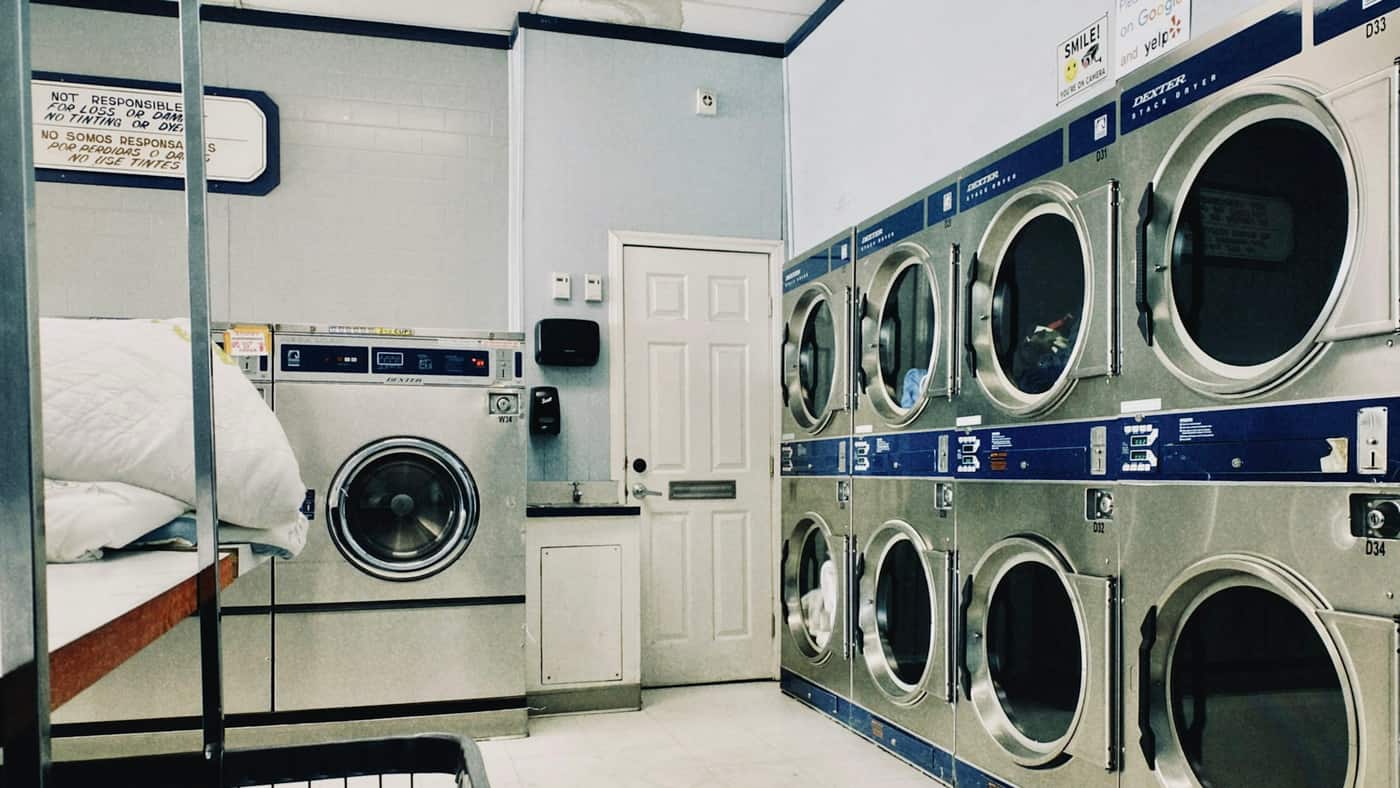
Apartment laundry room washer and dryer repair in the Twin Cities
Repair for shared coin and card washers and dryers in Twin Cities apartment buildings, for property managers who need the laundry room back in service.
Why do apartment laundry room machines keep breaking?
Apartment laundry machines run all day for dozens of residents who overload them, jam coin and card readers and never clean lint traps. Constant starts, vent restrictions and residential-grade machines in a commercial duty cycle wear out door locks, drain pumps and heating elements quickly.
Apartment Laundry Rooms: what is different
A shared laundry room is hard on equipment. A washer is loaded, abused and left by a different person every hour. Dryers run back to back, lint builds in the vent, and the coin or card reader is the part residents notice first when it stops working. A property manager hears about it from the tenant, not from the machine, and a laundry room that is down is a steady stream of complaints.
We repair commercial washers and commercial dryers on site at your property. Common calls are a door lock that will not release, a washer that will not drain, a dryer that runs but does not heat, and a reader that eats money. We diagnose, give you a written price to approve, and tell you honestly if a machine is worth fixing or has reached the end of its useful life.
Equipment that matters in apartment laundry rooms
- Commercial Laundry Equipment Repair
Property managers usually have a mix of brands and ages in one room. We approach the room as a whole: what is failing, what is about to, and what is cheaper to replace than repair.
- Commercial Washer Repair
Front-load and top-load washers in laundry rooms fail at door locks, drain pumps, water inlet valves and control boards. Overloaded drums wear the bearings and suspension.
- Commercial Dryer Repair
Dryers with a failed igniter, gas valve or element run but do not heat, and clogged lint and vent runs overheat and trip the high-limit. Heat problems on a dryer are a fire concern, not a nuisance.
- Preventive Maintenance
A scheduled visit that checks vents, belts, hoses, door seals and readers catches the faults that generate resident complaints. It is cheaper than responding to every one.
- Emergency Commercial Appliance Repair
A flooding washer or a dryer that smells hot is urgent, and so is a room with every machine down on a weekend. Call about a dead machine and we give you the earliest opening for that building.
- Ice Machine Repair
Larger communities and senior buildings sometimes have an ice machine in a clubhouse, dining room or fitness area. It is a small part of the work but it has its own scale and cleaning needs.
What shapes a repair visit here
Residents report problems, not machines
A tenant tells the front office that a machine ate their quarters, and the report rarely says which machine or what happened. A helpful route is a posted label on each machine with a number, so a complaint identifies the exact unit. That saves a technician from guessing which machine to open.
Residential-grade versus commercial machines
Some properties buy household-style washers and dryers with coin kits, or inherited them. They are not built for a hundred cycles a week, and the door lock, pump and timer fail early. A true commercial machine has a heavier drive, a larger drain and parts that are made for that duty. We tell you which kind you have and what that means for repair.
Lint and vent runs
Dryer vent runs are long in many buildings, with elbows and a roof or wall termination that residents cannot see. A restricted vent makes the dryer take two cycles, overheats the machine and is a real fire risk. We can see whether the machine is working and flag a restricted exhaust, but vent duct cleaning or rebuilding is building-side work beyond our scope.
Coin and card readers
The reader is often the failing part. Coin mechanisms jam with foreign coins and sticky residue, card readers lose their connection, and a bad reader makes a good machine look broken. We test the reader against the machine so you do not replace a good washer or dryer for what is really a payment problem.
Access, noise and tenant notice
Laundry rooms are in basements and on shared floors. We need the room open and the machines empty, and many buildings need notice posted before we shut a machine or a room down. Tell us the access arrangement and who holds keys when you call, so a visit does not stall at the door.
Fitting the visit around the operation
Laundry rooms are busiest evenings and weekends and quiet on weekday mornings, so a mid-morning weekday visit disrupts residents least. Tell us if the room has to stay open, whether we can take one machine at a time, and where the key and the shutoff valves are. Where the schedule allows, we can arrange a visit around a posted notice to residents. If every machine is down, say so when you call and we will tell you the earliest opening we have.
Inspections and food safety
There is no food-safety rule here, but there are safety and accessibility ones. Dryer exhaust has to be installed and maintained to the manufacturer's instructions and the local mechanical and fire code, and a restricted vent is a fire hazard. Gas dryers connect to gas piping that is the utility's and the building's, not ours. Gas odor in a shared laundry room means residents out of the room, then the utility or 911 called from the hallway outside. We repair the machines and test their operation.
Brands we see most
Guides
Other kinds of operation
Apartment Laundry Rooms questions
A washer shows finished but the door will not unlock. What is wrong?
The door lock or latch may have failed, or the machine may still think it has water or a cycle in progress. A drain pump that did not finish pumping out is common. Do not force the door. Residents should report it, and a technician checks the lock, the pressure switch and the drain.
A dryer runs but clothes are still damp. Is the machine bad?
Often not at first. A clogged lint screen, a crushed or restricted exhaust vent or a thermostat that cycles too early gives damp laundry. A dryer that has no heat at all points to an igniter, a gas valve, or an element. Check the lint screen and vent outlet before calling.
Why do some machines lose money to the reader, not the cycle?
A coin drop that jams on foreign coins, a card reader that has lost its link or a bad control interface can take payment and not start the machine. Check whether the display shows credit. If it does not, the reader is at fault, not the washer or dryer.
Should we replace the whole laundry room or repair as we go?
It depends on machine age, how many cycles each carries and what keeps failing. If one or two units drain cash and the rest are sound, repair. If drums, bearings and boards are going on most machines, plan a replacement. A written assessment of each unit makes the choice concrete.
Can a washer cause a leak in the unit below?
Yes, and it is a common reason for an emergency call. A split inlet hose, a loose drain connection or a failed pump can put water on the floor. Close the supply valves behind the machine if it is safe to reach them and call us, and tell building maintenance about the floor drain.