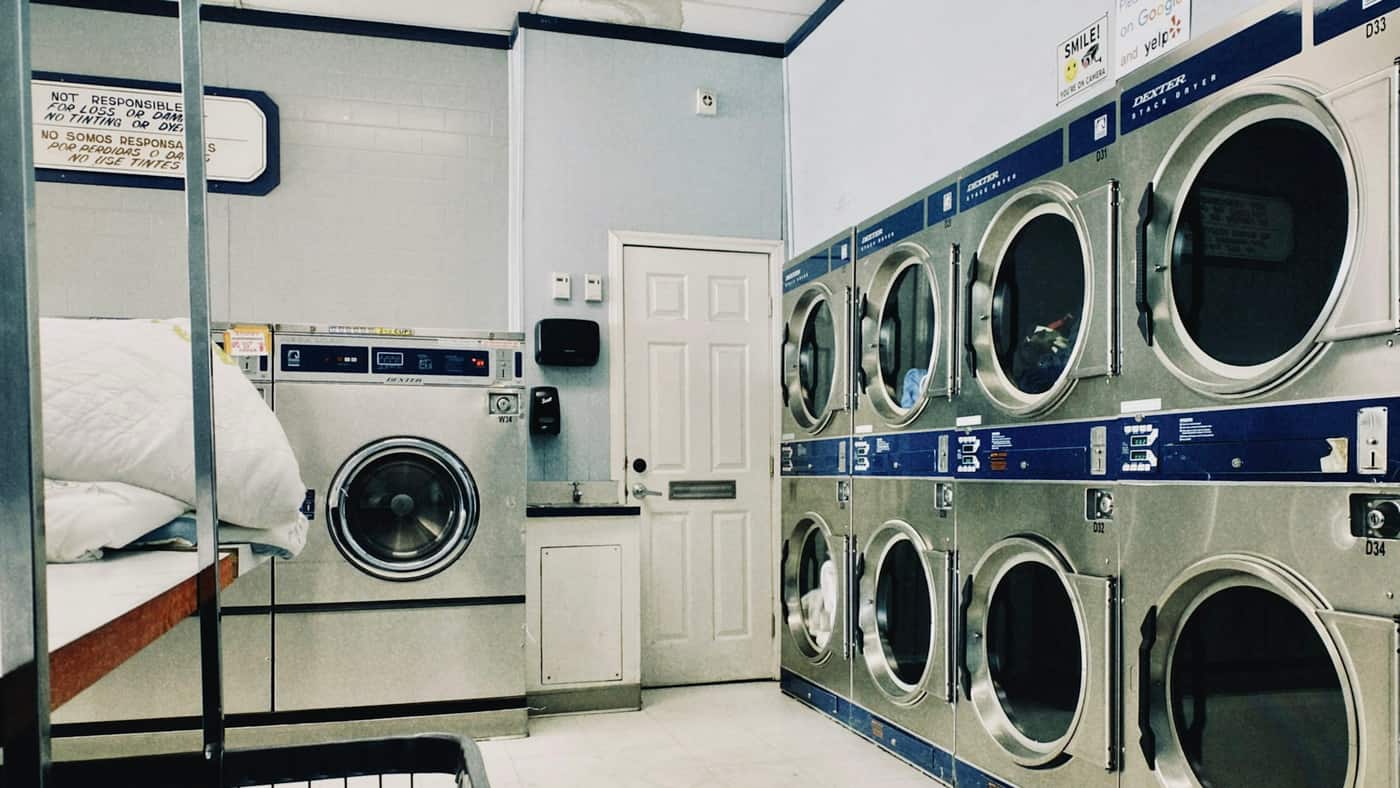
Commercial washer repair in Minneapolis and St. Paul
Repair of on-premises washer-extractors, soft-mount and hard-mount machines and commercial top-loads: drains, door locks, bearings, drives, dispensers.
Why will my commercial washer not drain, spin or finish a cycle?
A commercial washer that stops mid-cycle is usually waiting on a safety or a sensor: a door lock that did not engage, a drain valve that did not open, or an out-of-balance trip. Failed drive belts, a faulty inverter drive or worn bearings stop the spin. The control display or error code points to which one.
About commercial washer repair
Commercial washers do not fail the way household ones do. A washer-extractor spins linen at several hundred times the force of gravity, so out-of-balance trips, worn shock mounts and bearing damage shape the repair work. In a hotel back-of-house, a nursing home laundry, a bar's towel and apron cycle or a coin laundry, the washers carry a heavy daily load of cycles on water that may be hard and chemicals that are aggressive.
We diagnose on site, give you a written price, and then repair. Beyond the washer itself, the commercial laundry repair overview covers drying, ironing and cross-equipment issues like water supply and floor drains. This page deals with washers: hard-mount and soft-mount washer-extractors, commercial top-load machines, and the drain valves, door locks, bearings, inverter drives, chemical injection and payment systems that make them run. If you are not sure which type you have, the model plate tells you, and so does a look at the base.
Kinds of commercial washers we repair
- Hard-mount washer-extractors
Bolted to a reinforced concrete slab and built for high extract speeds. Bearing and seal replacement is major work, and the machine must be anchored back correctly or it will walk.
- Soft-mount washer-extractors
Suspended on springs or shock absorbers so they can sit on a standard slab. Worn shocks and suspension parts are a common service item, along with load-balance sensors.
- Commercial top-load washers
Agitator-style machines common in apartment laundry rooms and laundromats. Lid switch, drive belt or motor coupling, transmission and water valves are the usual parts.
- Front-load commercial washers
Smaller capacity front-loaders with door locks, drain pumps and electronic controls. Door lock and board faults are frequent.
- Card or coin-operated machines
The same washer fitted with a coin drop, a card reader or a central payment controller. Many no-start calls are payment-side, not washer-side.
Complaint, cause, correction
| Complaint | Likely cause | Correction |
|---|---|---|
| Fills but will not start the wash | The door lock did not engage or the door switch is not made, so the control will not allow agitation or tumble. | Check the door seats and nothing blocks the latch. A worn lock or a failed strike is replaced and the circuit tested. |
| Water will not leave the drum | The drain valve is stuck, the valve actuator or solenoid has failed, or lint and debris are blocking the valve or the standpipe. | The valve is cleaned or replaced. We also check the standpipe and floor drain to confirm the building side can take the flow. |
| Out-of-balance fault, cycle keeps stopping | A bunched load, or worn shocks and springs on a soft-mount machine, or loose mounting bolts on a hard-mount one. | Redistribute the load and check that the machine sits flat. The tech replaces suspension parts or re-torques the anchors if it is the machine. |
| Loud rumbling or knocking in spin | Worn main bearings, a failed drum spider, or a damaged shaft seal letting water reach the bearings. | Stop using the machine. Bearing and seal replacement is a major repair. The tech measures play at the drum before quoting. |
| Drum does not spin up, or spins slowly | A broken or slipping drive belt, a failed motor, or a fault in the inverter drive that controls motor speed. | Belts and pulleys are inspected first. If the belt is sound, the inverter's fault code and the motor windings are checked. |
| Water in the soap compartment never stops or never comes in | A fill valve that is stuck open or a coil that has failed, or low supply pressure from a clogged inlet screen. | The inlet filter screens are cleaned and the valve is tested and replaced if it will not close or open fully. |
| Detergent or sanitizer is not injected | The signal relay from the washer to the chemical pump is not triggering, a peristaltic pump tube has worn through, or a supply line is clogged. | We check the washer's output signal against the dispenser. Tube and pump repairs are coordinated with whoever supplies the chemicals. |
| Leak at the front door or under the machine | A hardened door gasket, a loose hose clamp on the drain or fill, or a seal that is leaking at the shaft. | Gaskets and clamps are straightforward. A shaft leak means the lower seal has failed and needs the drum assembly accessed. |
| Card or coin machine will not accept payment or start | A jammed coin drop, a dirty or failed card reader, or lost communication to a central controller, with the washer itself fine. | We test the washer in manual test mode to separate a payment fault from a machine fault, then work on the right side. |
Check these before you call
- Confirm the door is fully closed and nothing is caught in the latch. Look at the display for a door or lock message.
- Check the breaker and the wall disconnect for the washer, and confirm both hot and cold water supply valves are open.
- Remove an obviously oversized or bunched load and restart so the machine can rebalance. Do not overload past the rated capacity.
- Clean the lint and debris from the inlet screens only if you can reach them with the water supply valves closed.
- Write down any code or message on the display before you power-cycle, and note which step of the cycle it stopped on.
Stop at gas valves, 208, 240 or 480 volt wiring, sealed refrigerant circuits, steam under pressure and anything live. Those are a call.
While it is down
A down washer in a hotel, care home or bar means you either send linen out or run the remaining machines harder. Redistribute loads so the working washers are not pushed past capacity, which only damages bearings and shocks. If the drum is full of water and a drain fault is the problem, tell us before the tech arrives, since we may need to bring pumps or a way to drain it safely. Give us the make, the model, and whether it is hard-mount or soft-mount. The error code is the quickest way to get a first diagnosis.
Upkeep that prevents the calls
- Check that hard-mount machines remain firmly anchored and that soft-mount springs or shocks still hold the machine level.
- Clean the fill valve inlet screens and look at hoses for bulges or cracked clamps.
- Wipe the door gasket and leave the door open between uses so moisture dries out.
- Inspect drive belts and listen for bearing noise on the spin. A new rumble is a warning that deserves a visit before the bearing fails.
- Keep chemical injection lines flushed and ask the chemical supplier to check pump tubes for wear.
Repair or replace
Washers last long when bearings, seals and suspension are kept up, but a failed main bearing or a cracked drum spider on a high-extract unit can cost close to a replacement, especially if the machine is old. A control board that is no longer made also pushes the call toward replacing. Compare the quote with the machine's age, the work it does, and how soon you can afford downtime. The repair-or-replace guide shows how to decide.
Brands we repair
See also
Related repairs
Where it matters most
Where we repair commercial washers
- Commercial washer repair in Fridley, MN
- Commercial washer repair in Golden Valley, MN
- Commercial washer repair in Hastings, MN
- Commercial washer repair in Inver Grove Heights, MN
- Commercial washer repair in Lakeville, MN
- Commercial washer repair in Lino Lakes, MN
- Commercial washer repair in Maple Grove, MN
- Commercial washer repair in Maplewood, MN
- Commercial washer repair in Minneapolis, MN
- Commercial washer repair in Minnetonka, MN
- Commercial washer repair in New Brighton, MN
- Commercial washer repair in New Hope, MN
More commercial laundry repair
Commercial washer repair questions
How do I tell whether my washer is hard-mount or soft-mount?
Look at the base. A hard-mount machine is bolted directly to a thick reinforced concrete pad. A soft-mount sits on springs, shock absorbers or rubber isolators and is usually freestanding on a normal slab. The model plate or manual also says which type it is.
Why does my washer-extractor keep stopping with an unbalance code?
Heavy items bunched on one side, such as blankets or mop heads, are the usual cause. If it happens with normal loads, look at the suspension on soft-mount units or loose anchor bolts on hard-mount ones. A balance sensor fault can also stop the cycle.
Can a washer's bearings be replaced on site?
Often yes, but it is major work. The drum assembly has to be accessed, the seal replaced alongside the bearing, and the machine reset on its mounts. We inspect first and quote it in writing so you can compare it with a replacement.
Why does one washer in a bank use less detergent than the others?
The chemical injection output for that washer may not be triggering, a pump tube may be worn, or the dosing line may be clogged. That is a dispenser or signal fault, not a washer fault, and it can leave linen unclean.
What does an inverter drive do on a commercial washer?
It controls motor speed by varying frequency, so the drum can run slowly for washing and spin fast for extraction. When it faults, the washer may not spin or may stop in extraction. The fault code on the drive tells the tech where to look.
Can you tell whether a payment system or the washer has failed?
Yes. We run the washer without the payment device and check whether the cycle starts. If it runs, the coin drop, card reader or controller is the problem. If it does not, the washer's own control or safeties are at fault.