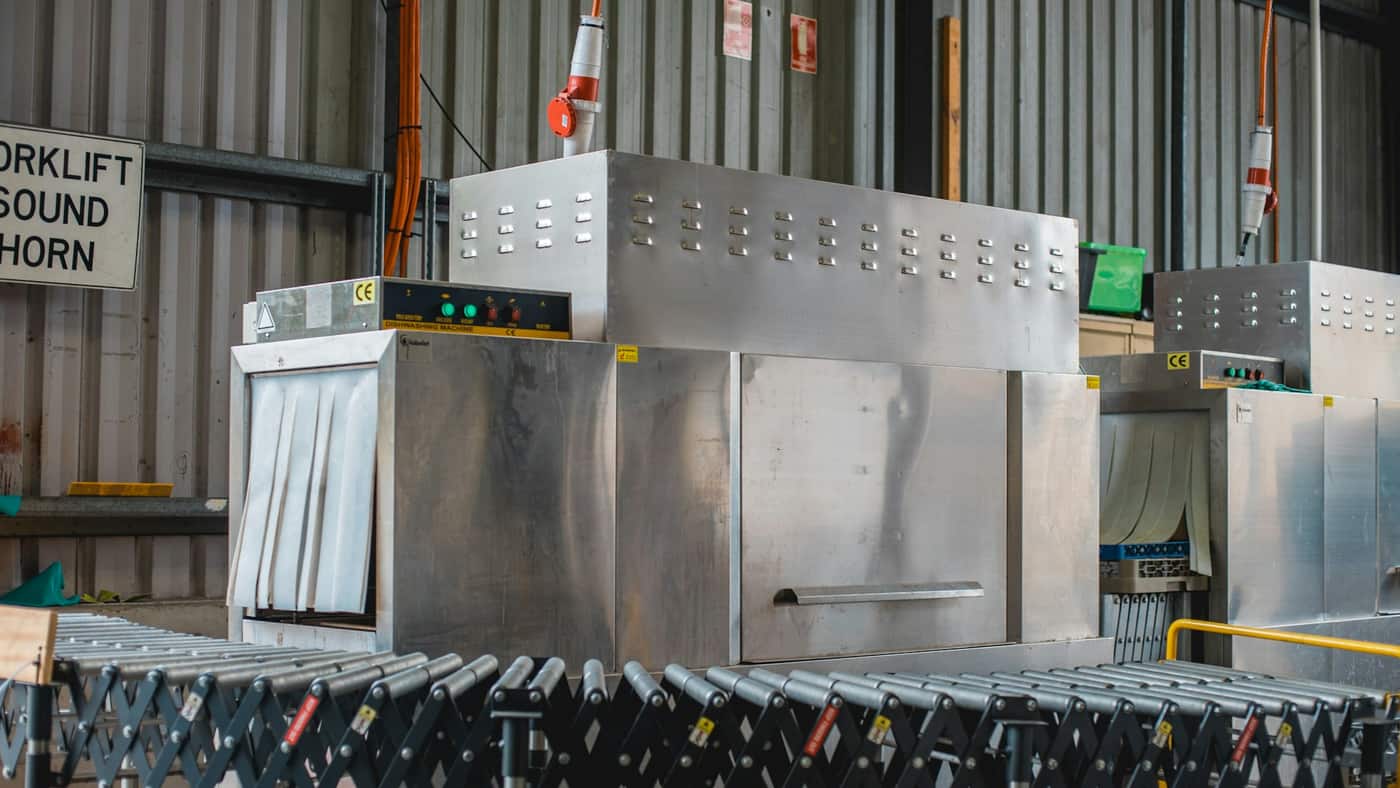
CMA dishmachine repair in the Twin Cities
CMA undercounter and door-type dishmachine and glasswasher repair in the Twin Cities: low-temperature chemical sanitizing, feeders, drains and heaters.
What fails most often on CMA dishmachines?
On CMA low-temperature chemical machines, the chlorine sanitizer feed, worn peristaltic pump tubing and clogged wash arms cause most calls. Drain pumps clog on glass chips, door switches wear out, and tub heaters scale. A machine that washes but fails a sanitizer test has a feed problem, not a heating problem.
About CMA Dishmachines equipment
CMA Dishmachines is best known for compact undercounter machines and glasswashers that sanitize with chemical rinse instead of hot water. That makes CMA common in bars, coffee shops, small restaurants, church kitchens and any space where there is not enough hot water or electrical capacity to run a 180 degree final rinse. In the Twin Cities they sit behind bars and in prep rooms more often than in big dish rooms, and a single failed feeder can put a whole bar out of clean glasses.
A low-temperature machine rewrites the repair checklist. The sanitizer is a chlorine solution pumped into the final rinse, and the health inspector tests it with a strip. When the strip reads low, the fault is in the feed: pump tubing, a sanitizer jug, a clogged injector or a failed relay. We approach a commercial dishwasher or glasswasher of this type by testing the chemical concentration first and the heating second.
CMA low-temperature chemical machines
Equipment guide
Seen on this line: Feeder tubing split or worn, sanitizer not dosing / Injector or fitting clogged or corroded by chlorine / Tank heater scaled so wash temperature runs low / Test strip reading low despite a full jug
In a CMA chemical-sanitizing machine, detergent goes into the wash and a chlorine sanitizer goes into the final rinse through peristaltic feeder pumps. Pump tubing wears out from being squeezed by the pump head, and when it splits the machine keeps running while the feed stops, so the first sign is a failed test strip. Chlorine is corrosive, so fittings and the injector fitting degrade. Tank heaters in these models are meant to hold a modest wash temperature, and the machine's thermal tolerance is narrow, so a scaled element or a cold supply leaves the sanitizer ineffective. Check the concentration and the temperature together.
CMA glasswashers and undercounter units
Equipment guide
Seen on this line: Drain pump or screen clogged with debris / Door switch or hinge spring worn / Rinse additive not feeding, glass spotting / Scale film in the tub and spray arms
CMA glasswashers are used in bars where the load is glass: lipstick, beer residue and citrus pulp. The drain pump and its screen clog on glass chips, straw wrappers and fruit, and a clogged drain leaves standing water in the tub. Door switches and spring hinges wear from constant opening during a rush. The rinse additive feed matters on glass, and when it fails, glasses dry spotted. Hard water films the glass, and scale in the tub and wash arms reduces the spray. Machines on a bar often run for hours without a daily flush, so soil accumulates.
CMA door-type machines
Equipment guide
Seen on this line: Door seal leaking spray onto the floor / Drain valve not seating, tank not holding water
CMA also builds larger door-type machines for kitchens with more volume. The same chemical-feed principles apply, with a bigger tank, a larger pump and a door that has to seal under steam and spray. Because the machine runs a longer shift, door seals, hinges and the door switch see far more cycles than the undercounter versions. Door seals, the wash pump seal and the drain valve are the wear parts, and the load on the chemical feed is heavier, so tubing and fittings need more frequent inspection. The drain valve is worth testing at each visit, since a valve that does not seat lets the tank drain slowly and the machine then runs with a low water level.
Finding the model and serial plate
The data plate is on the machine's side or back, and CMA model numbers carry letters that separate undercounter, glasswasher and door-type families. Record the full model, the serial number, and the electrical rating. Note whether the machine is chemical-sanitizing, and write down the sanitizer product and concentration your supplier specifies. A photo of the plate and the feeder pumps helps.
Parts
CMA parts are available through its distribution channel, and common items like pump tubing, door switches, drain pumps and wash arms are routinely replaced. Feeder pump heads, tubing and injectors are consumables that wear on a schedule. Control boards and heaters are model specific. The chemical supplier often owns the feeders, so check whether the feed equipment is yours or theirs before ordering.
Manufacturer warranty
If this equipment is still under the manufacturer's warranty, it should usually go through the manufacturer's authorized service network first. We are an independent company and not the manufacturer.
See also
CMA Dishmachines repair questions
What sanitizer concentration should a CMA machine reach?
For chlorine in a chemical sanitizing machine, the FDA Food Code sets a minimum concentration and a minimum rinse temperature. Test with the right strip at the rinse during a cycle. If the reading is low, the cause is nearly always the feeder tubing, the jug supply or the injector.
Why does my CMA machine leave water in the bottom?
Standing water is usually a clogged drain pump screen, a kinked drain hose or a pump that is failing. Debris from glasses and food collects at the screen. Clear the screen with the machine powered off, and call if water remains after cleaning.
Why do my glasses spot even though the machine runs?
Spotting comes from hard water, a rinse additive that is not feeding, or a low rinse volume from clogged nozzles. In hard water, a softener or a descale cycle makes a difference. Check the additive supply first, then the nozzles.
Can a low-temperature machine pass a health inspection?
Yes, when it delivers the required sanitizer concentration at the correct temperature and the operator can show a test strip result. The inspector will check the machine as it runs. A machine that cannot show a passing test needs repair before it is used again.
How do I change feeder tubing on a CMA machine?
Feeder tubing is a wear item that changes with the pump head, and the procedure involves the chemical supply lines. Chemicals are hazardous, so wear gloves and eye protection and follow the chemical supplier's sheet. If you are unsure, call us or the supplier so the lines are primed properly.