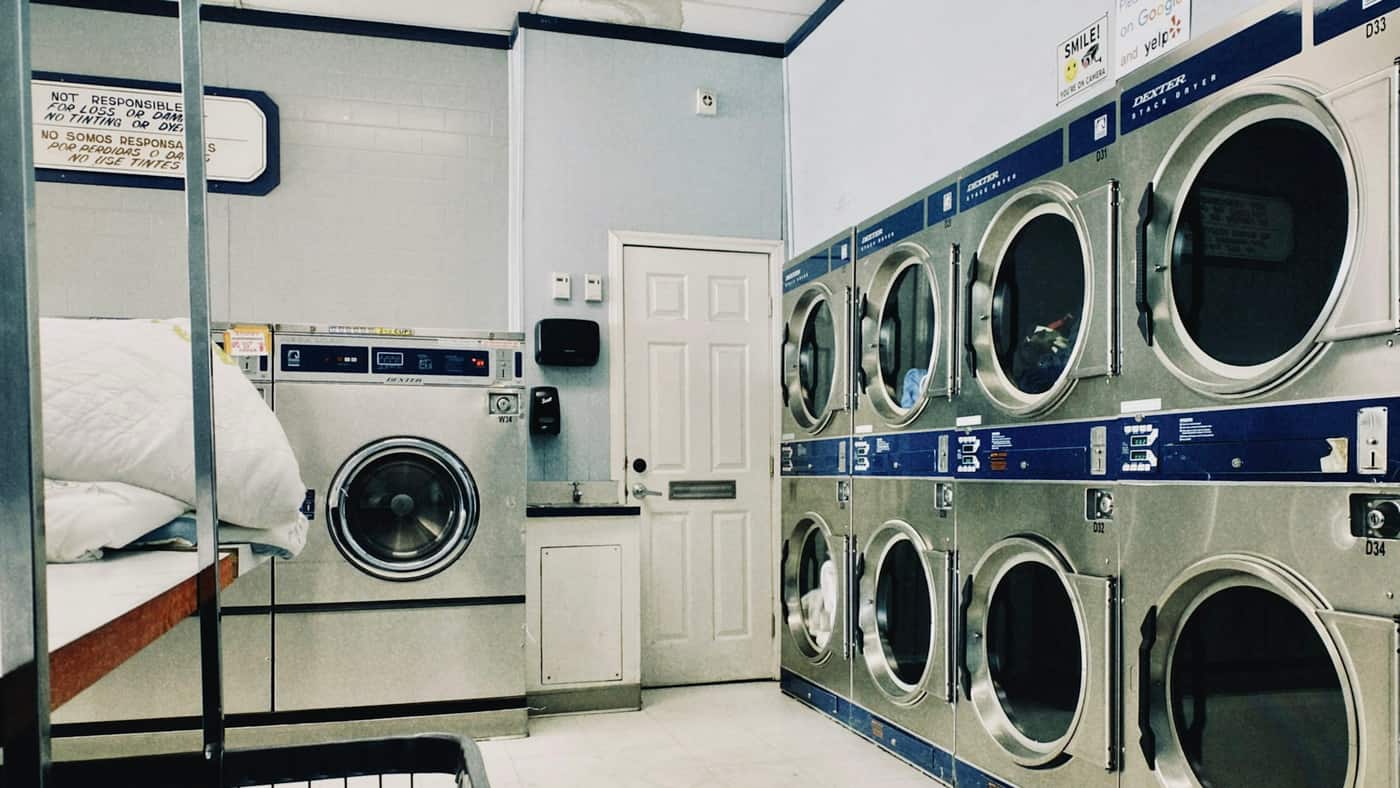
Commercial dryer repair in Minneapolis and St. Paul
On-site repair of gas and electric commercial dryers and tumblers: burners, igniters, airflow and lint, belts, rollers, high-limit trips and stacked units.
Why is my commercial dryer running but not drying or heating?
A dryer that tumbles but does not heat usually has a gas burner that is not lighting: a failed igniter, flame sensor or gas valve coil. A dryer that heats but takes forever is almost always airflow: lint packed in the screen, a crushed or long exhaust run, or no make-up air. Both need a tech.
About commercial dryer repair
A commercial dryer is a burner, a fan and a big rotating drum, and nearly every no-heat or slow-dry call traces back to one of those three. Gas models light with a hot-surface igniter or spark, prove the flame with a sensor, and move that heat through the lint screen and out the building. In an apartment laundry room, hotel laundry or laundromat, a dryer that takes two cycles to dry a load costs more in gas and in tied-up machines than most owners realize.
We diagnose commercial tumblers and stacked dryers on site and give you a written price to approve. For the washers beside them, see our commercial washer repair page. Gas supply piping and the building side of the exhaust are outside our scope, but we will tell you when the fault is there and what to ask the right contractor to look at. Lint, airflow and make-up air are where most dryer calls start, and they are cheap to rule out before a part is replaced.
Kinds of commercial dryers we repair
- Gas-fired tumblers
Burner assembly with a gas valve, igniter or spark module, and flame sensor. If you smell gas, leave and call the gas utility or 911 from outside; gas valve and burner work is tech-only.
- Electric tumblers
Heating elements, contactors and high-limit thermostats. Failed elements and a worn contactor are the usual causes of low heat, and the circuits run on high voltage.
- Stacked dryers
Two pockets, one above the other, each with its own burner and controls. Both vent into the same building exhaust, so a problem in one can mask or mimic a problem in the other.
- Large capacity tumblers and soft-mount dryers
Drum support rollers or trunnions, large drive belts and idlers. Roller and belt wear shows as noise and slow tumble before it shows as failure.
- Coin and card-operated dryers
A payment device in front of the same machine. We separate a coin-drop or reader fault from the dryer by running the machine without it.
Complaint, cause, correction
| Complaint | Likely cause | Correction |
|---|---|---|
| Tumbles with no heat on a gas dryer | The igniter has failed or cracked, the flame sensor is coated, the gas valve coil is dead, or the gas valve is closed or not getting a signal. | The tech watches the ignition sequence, measures igniter current and sensor reading, and replaces the part that fails. Smelling gas means leave and call the gas utility from outside. |
| Heats, shuts off, then restarts | The high-limit thermostat or the airflow switch is cutting the burner because exhaust air cannot get out. Lint blockage is the main reason. | Clean the lint screen and the lint chamber, then have the exhaust run checked for lint buildup. The tech tests the limit before resetting it. |
| Clothes take two cycles to dry | Lint in the screen or exhaust, a crushed or kinked flex duct, a vent run with too many elbows or too long, or not enough make-up air arriving. | We measure the exhaust airflow and look at the vent connection. If the building duct or make-up air opening is the fault, we tell you plainly. |
| Drum will not turn | A broken or stretched drive belt, a failed idler pulley, a seized drum roller, or a motor that has failed or tripped its overload. | The belt, idler and rollers are inspected and replaced as needed. If the motor is the problem, the windings and capacitor are tested. |
| Squealing or thumping as the drum rotates | A worn drum roller or support wheel, a flat spot on a roller, or a loose belt slipping across a pulley. | Roller replacement is done as a set. We check belt tension at the same visit so the new parts last. |
| Burning smell or scorched laundry | Lint on the burner, a blocked burner tube, or heat that cannot leave through the exhaust. A lint fire is a real risk. | Stop using the dryer and clean the lint out of the cabinet and exhaust path. Have the burner and limit checked before the next load. |
| Cycle ends early or the timer will not advance | A failed timer, a bad temperature sensor, or a door switch that is intermittently opening the circuit. | The tech tests the door switch and the sensors, then the timer or control board. |
| Burner roars, flames lift or yellow flames show | Low gas pressure at the dryer, a restricted orifice, or insufficient combustion air from make-up air problems. | Gas pressure and valve work are tech-only. We read the manifold pressure against the data plate and tell you if the problem sits on the utility side of the meter. |
| Stacked unit: top dryer works, bottom dryer does not | The bottom pocket has a separate igniter, valve or control fault, or its lint screen and duct section are blocked. | Each pocket is diagnosed on its own. We then check whether a shared exhaust problem is hurting both. |
Check these before you call
- Clean the lint screen completely before every load, and look for lint caked on the screen mesh itself.
- Check that the dryer breaker, the electrical disconnect and the gas shutoff valve are on. A gas smell at a dryer or its flex connector means clear the room and call the utility or 911 from outside.
- Confirm that the dryer door closes fully and the door switch clicks.
- Look at the exhaust duct behind the machine to see if it is crushed, disconnected or pushed flat against the wall.
- Make sure the make-up air louver or opening in the laundry room is not blocked by boxes or equipment.
Stop at gas valves, 208, 240 or 480 volt wiring, sealed refrigerant circuits, steam under pressure and anything live. Those are a call.
While it is down
A dryer that is slow costs you more than one that is dead, because it holds up the washers behind it. Move loads to working dryers at a normal load size, and do not run a suspect dryer through repeated cycles, since lint buildup and heat are what start fires. If a burner will not light, do not try to relight it yourself. When you call, give us the make, the model, whether it is gas or electric, whether it is stacked, and what the dryer does when you start it. If the exhaust looks crushed, tell us.
Upkeep that prevents the calls
- Empty and clean the lint screen after every load, and vacuum the lint chamber on a schedule.
- Have the whole exhaust duct cleaned on a regular schedule by a duct contractor, since lint in the building duct is outside what we service.
- Keep the make-up air opening clear, because a dryer starved of air burns inefficiently and overheats.
- Check belt tension and drum roller noise at regular intervals, especially in high-use laundries.
- Inspect the burner area and igniter for lint and dust, and have the flame sensor cleaned during service visits.
Repair or replace
Burners, igniters, belts, rollers and thermostats are all inexpensive next to a new tumbler, and a gas dryer with a sound drum and cabinet is worth repairing. Rust-through in the drum or cabinet, a cracked drum shell, a firebox damaged by overheating or a heavy burner replacement on a very old unit pushes it the other way. Our repair-or-replace guide walks through the age, the repair history and the cost of downtime.
Brands we repair
See also
Related repairs
Where it matters most
Where we repair commercial dryers
- Commercial dryer repair in New Brighton, MN
- Commercial dryer repair in New Hope, MN
- Commercial dryer repair in Oakdale, MN
- Commercial dryer repair in Plymouth, MN
- Commercial dryer repair in Prior Lake, MN
- Commercial dryer repair in Ramsey, MN
- Commercial dryer repair in Richfield, MN
- Commercial dryer repair in Rosemount, MN
- Commercial dryer repair in Roseville, MN
- Commercial dryer repair in Saint Paul, MN
- Commercial dryer repair in Savage, MN
- Commercial dryer repair in Shakopee, MN
More commercial laundry repair
Commercial dryer repair questions
Why does my dryer shut off and restart by itself?
The high-limit thermostat or airflow switch is likely cutting the burner because heat cannot leave the drum. Lint in the screen or the exhaust is the common cause. The dryer cools, the limit resets, and the cycle starts again, which keeps repeating and wastes gas.
How long can an exhaust duct run before it hurts drying?
Every dryer has a maximum duct length and elbow count in its installation manual, and a long run with many elbows slows exhaust flow. A crushed flex connector can hurt as much as a long run. The data plate and manual give the model's limits.
What is make-up air and why does the dryer need it?
A dryer pushes air out of the building, so the same volume must come back in. Without a make-up air opening, the room goes negative, exhaust slows, and the burner may run poorly. A blocked louver in the laundry room is a common cause of slow drying.
Can the same technician fix a gas dryer and a stacked unit?
Yes. A stacked unit is two dryers in one frame, and each pocket is tested on its own burner, valve and controls. Where both pockets share an exhaust, we also check the duct connection for lint or a crush that could be hurting both.
Is a squealing dryer drum dangerous?
A squeal means a worn roller, idler or belt. It is not an emergency, but a failed roller can damage the drum or the drive belt. Have it looked at before the machine stops during peak hours.
Why do gas dryers sometimes trip on a flame failure?
The sensor may be coated, the igniter weak, the gas pressure low or the burner tube restricted by lint. Gas pressure and burner work are tech-only. If you ever smell gas, leave the building and call the gas utility or 911 from outside.