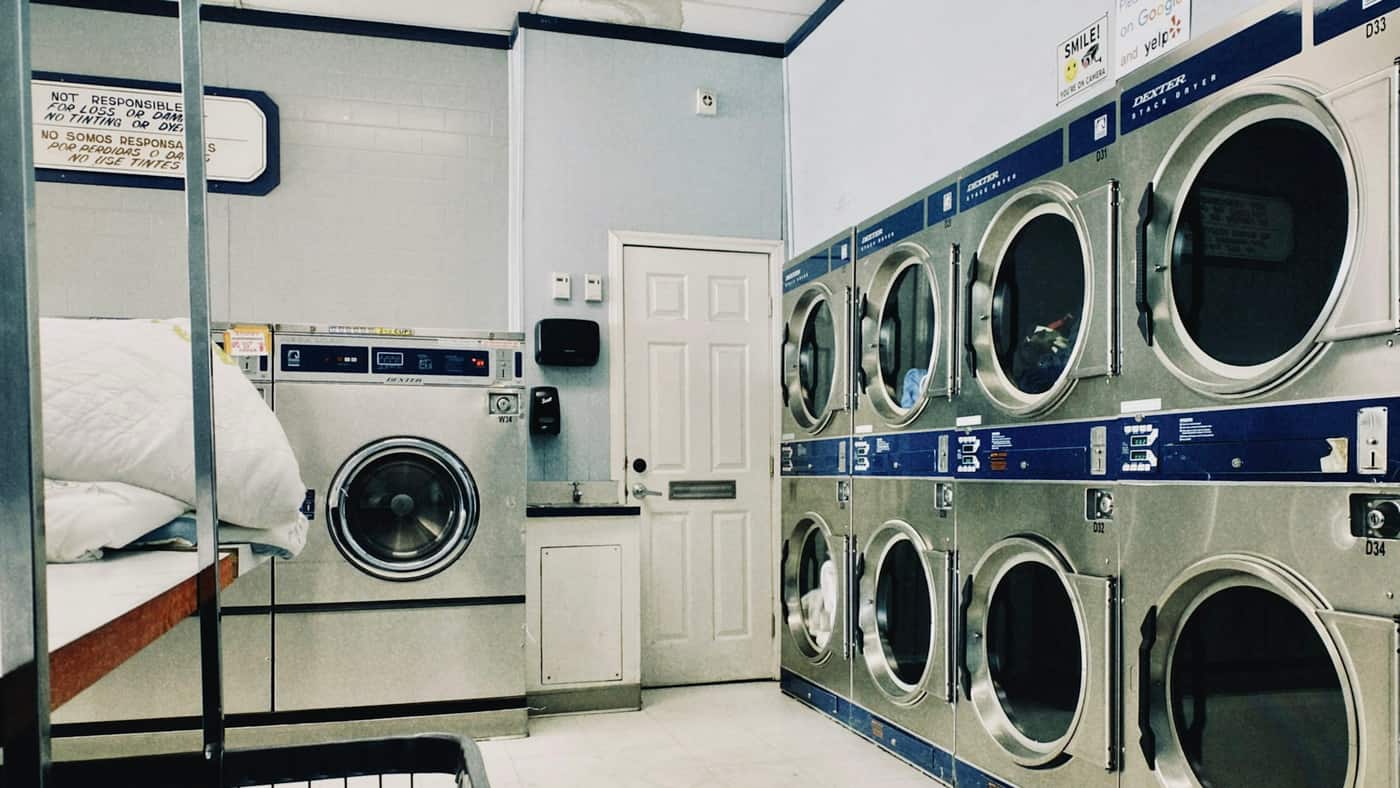
Commercial laundry equipment repair in Minneapolis and St. Paul
On-site commercial laundry equipment repair in Minneapolis and Saint Paul for washers, dryers and on-premise laundries in hotels, care homes and buildings.
Why is my commercial washer or dryer not working properly?
A commercial washer or dryer that stops working properly usually has a problem outside the drum: restricted venting, weak water pressure, a slow drain, low gas pressure, a lost phase of power or a payment system fault. A technician checks those supplies first, then the door lock, control board, motor and heating system.
About commercial laundry machine repair
Commercial laundry equipment runs harder than anything in a home. Washer-extractors spin at high speed with heavy loads, tumble dryers run for hours moving hot air through lint, and a laundromat or apartment laundry room may cycle machines from morning to night with little rest between loads. We repair these machines on site, at your property. The equipment pages for commercial washer repair and commercial dryer repair cover each machine.
Laundry is a place where the building and the machine meet. Water supply, drain capacity, gas, three-phase power and exhaust ducting all decide whether the machine performs. This page covers those cross-machine problems, the ones that show up on more than one machine in the room. Gas odor in a laundry room with gas dryers means clearing the room and calling the utility or 911 from the parking lot. We do not do building exhaust duct cleaning, gas piping or plumbing, and we will tell you if the fault lies there.
Kinds of commercial laundry machines we repair
- Soft-mount washer-extractors
Machines that sit on springs or shock mounts and can go on an ordinary floor slab. Bearing, shock and door lock wear are typical; see commercial washer repair.
- Hard-mount washer-extractors
Large machines bolted to a reinforced floor that transmit vibration into the building, so imbalance and anchor bolts matter. See commercial washer repair for the failures we find.
- Tumble dryers
Gas, electric and steam-heated dryers moving large volumes of air through a basket. See commercial dryer repair for ignition, burner and airflow faults.
- Stack and front-load coin machines
Compact machines in apartment buildings and laundromats where coin or card systems add a failure point beyond the machine itself.
- Chemical dosing equipment
Peristaltic pumps and supply lines feeding detergent, bleach and softener in on-premise laundries. Tubing wears and clogs.
- Payment and control systems
Coin drops, card readers and networked controllers that report cycles and handle refunds.
Complaint, cause, correction
| Complaint | Likely cause | Correction |
|---|---|---|
| Dryers take multiple cycles and shut off hot | Lint and a restricted exhaust duct choke airflow, so heat cannot leave the basket and the high-limit cycles the burner. Lint is fuel, so a restricted dryer is both an efficiency and a fire concern. | Clean the lint screen each load and call us for machine-side burner and sensor checks. Cleaning the duct itself and repairing building ductwork is a separate trade, and we tell you when airflow is the limit. |
| Washers fill slowly or won't fill | Low water pressure, a clogged inlet screen or a failing fill valve slows the machine. Where hot water runs through a shared heater, a laundry that starts several machines at once will drop pressure for all of them. | We check the screens, valve coils and flow, and test pressure at the machine. If the building supply is the cause, a plumber must resize or add storage. |
| Water stays in the drum after the cycle | A blocked drain valve, a failed drain pump or a drain line that cannot take a rapid dump keeps water in the tub. Large washer-extractors empty fast and need a correctly sized drain. | We test the drain valve and pump and clear what is on the machine side. A shared floor drain or stack that backs up is a plumbing matter. |
| Gas dryers don't ignite or lose flame | Low gas pressure, a failed igniter, a flame sensor coated with lint or a gas valve fault leaves the dryer running cold. Loads stay damp and the machine times out. | Stop using the dryer and call. Gas valve and ignition work needs a technician, and a smell of gas means leave and call the utility from outside. |
| Machine shakes, walks or bangs during spin | Worn shock absorbers, broken springs, loose mounting bolts or a failing bearing let the drum go out of balance. Hard-mounted machines transmit that force into the floor and neighboring walls. | Stop the spin and redistribute the load. We inspect the suspension, mounts and bearings. Sustained imbalance damages the bearing and the tub. |
| Door will not unlock or won't close | The door lock is an interlock that proves the door is closed and keeps it shut until the drum stops and drains. A failed lock switch or a bent latch gives an error and holds the cycle. | Do not force the door. We test the lock, wiring and latch and replace the faulty part. Overriding a door interlock is unsafe on a spinning machine. |
| Machines accept money but don't start | A coin drop jam, a card reader fault or a controller that has lost its settings can leave a working machine unusable. Customers lose money and calls go to the owner. | We test the payment device and wiring and confirm the machine runs on a test cycle. Swapping the device is quick once the fault is isolated. |
| Linens come out gray, stiff or smelling | Hard water, a failing dosing pump, a stuck supply tube or low hot-water temperature leaves soil and chemical in the load. The machine seems fine but the results are wrong. | We check the chemical supply tubes and pumps, the water temperature at the machine and the water quality, since the machine can only wash as well as its supplies allow. |
Check these before you call
- Confirm the breaker is on and that every water valve behind the machine is fully open.
- Look at the display for an error code and note it along with the model and serial number on the data plate.
- Empty and clean the lint screen on dryers, and check that the vent hose behind the machine is not crushed or disconnected.
- Check that the load is balanced and not overfilled, and that nothing is caught in the door seal.
- If you smell gas near a dryer, leave and call the gas utility or 911 from outside, and do not try to relight anything.
Stop at gas valves, 208, 240 or 480 volt wiring, sealed refrigerant circuits, steam under pressure and anything live. Those are a call.
While it is down
In a hotel, care facility or apartment building, move linens to a working machine or a second set, and put an out-of-order sign on the failed one so residents do not feed money into it. Do not run a dryer that overheats or smells scorched. Keep wet loads from sitting, since mildew sets in quickly. Tell us the make, model, fuel, error code and whether the machine is on a coin, card or manual system, so the visit can be planned correctly.
Upkeep that prevents the calls
- Clean dryer lint screens every load and have exhaust ducts cleaned on a schedule by the proper trade.
- Check hoses, inlet screens and water valves every few months and replace hoses showing wear.
- Tighten mounting bolts and inspect shocks and springs on washers at least yearly.
- Calibrate chemical dosing and replace peristaltic tubing on the manufacturer's interval.
- Test door locks, safety switches and payment devices regularly, and record machine cycle counts if the controller reports them.
Repair or replace
Commercial washers and dryers often work for many years when the drum, tub and frame are sound. Repair is usually right for door locks, valves, boards, igniters and belts. Replacement becomes reasonable when a tub or bearing housing has failed, the cabinet is badly rusted or parts for an old control platform are no longer made. In a laundromat or apartment building, machine downtime also costs income. Our repair or replace guide explains the factors, and we give you a written diagnosis first.
Brands we repair
See also
Related repairs
Where it matters most
Where we repair commercial laundry machines
- Commercial laundry machine repair in Ramsey, MN
- Commercial laundry machine repair in Richfield, MN
- Commercial laundry machine repair in Rosemount, MN
- Commercial laundry machine repair in Roseville, MN
- Commercial laundry machine repair in Saint Paul, MN
- Commercial laundry machine repair in Savage, MN
- Commercial laundry machine repair in Shakopee, MN
- Commercial laundry machine repair in Shoreview, MN
- Commercial laundry machine repair in South St. Paul, MN
- Commercial laundry machine repair in St. Louis Park, MN
- Commercial laundry machine repair in West St. Paul, MN
- Commercial laundry machine repair in White Bear Lake, MN
More commercial laundry repair
Commercial laundry machine repair questions
Why do my dryers need more time to dry than when they were new?
Restricted exhaust is the usual cause. Lint packs the duct, long runs or crushed hoses add resistance, and less air leaves the drum so loads stay wet and the burner cycles off on its high-limit. Clean the screen every load and have the duct checked.
What is the difference between a soft-mount and a hard-mount washer?
A soft-mount machine absorbs vibration with springs or shocks and can sit on a regular concrete slab. A hard-mount machine is bolted to a thick reinforced floor and the building absorbs the force. The repair differs because hard-mount bearings and anchors take heavier loads.
Can a three-phase machine run if one phase is lost?
Not safely. A single-phased motor overheats and fails, and many controls will fault out. If a machine hums, runs weak or trips a protector, call us and the electrician. Never keep restarting a machine that shows signs of a lost phase.
Why does the washer say the door is open when it is closed?
The door lock switch or latch may be worn or out of adjustment, or the door seal may be catching on laundry. Check for trapped items first. If it persists, the lock assembly or wiring needs testing. Do not tape or jumper the switch.
Do dryers on steam or gas need different service than electric ones?
Yes. Gas dryers add ignition, flame and gas valve parts, steam dryers rely on coils, traps and valves, and electric dryers on elements and contactors. The drum, bearings, belts and airflow problems are shared, but the heating system diagnosis differs.
How do I know whether my coin or card reader or the machine is at fault?
Run the machine on a service or test mode if its control has one. If it runs on test but not with a coin, the payment device or wiring is the issue. If it fails both ways, the machine has the fault. We test both before replacing a part.