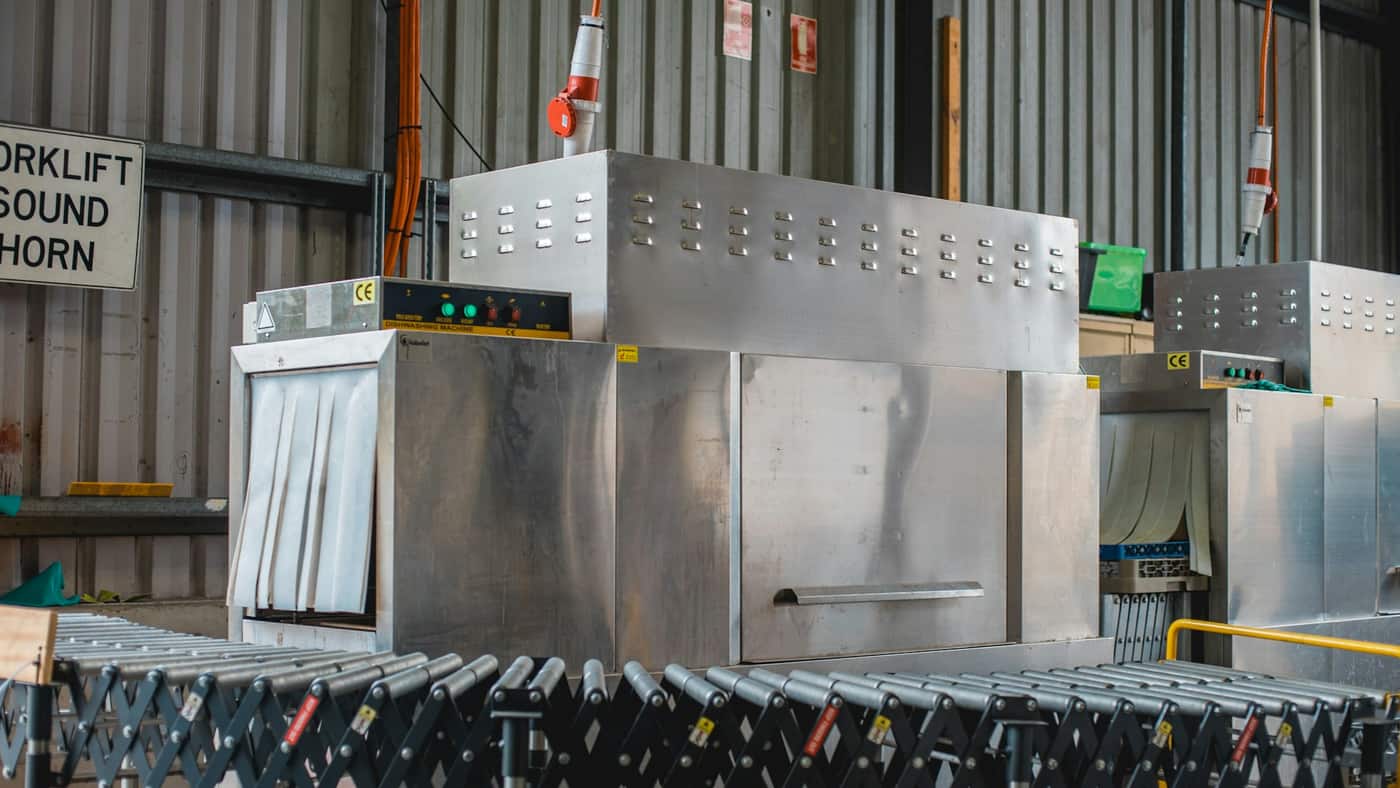
Glasswasher repair in Minneapolis and St. Paul
Glasswasher repair for Twin Cities bars: undercounter and rotary machines, low-temp chemical sanitizing, spotting, film and carousel conveyors.
Why is my glasswasher leaving spots and film on glasses?
Spots and film come from hard water minerals, a rinse aid pump that is not feeding, detergent that is too strong or too weak, a worn or clogged rinse arm, or a dirty tank. Beer and dairy protein film points to detergent dosing and rinse temperature. Descaling and chemical feed checks are the first fixes.
About glasswasher repair
A bar lives on clean glassware. A foamy pint in a glass with a film on the inside or a grease ring on the lip goes flat fast, and a cloudy stemware set makes the room look cheap. Glasswashers are built for that single job: short cycles, glass racks, and in most bar machines a low-temperature chemical sanitizing step rather than a high-heat final rinse. The failures are different from a dish machine, so this page is its own.
We repair glasswashers on site and give you a written price before work starts. Most bar machines run behind the counter, in a small space with a floor drain and little room to get at them, so tell us how the unit is installed and when the bar is closed. For full plates and pans, see commercial dishwasher repair. For the cold side of the bar, bar cooler and kegerator repair covers back-bar coolers and draft systems.
Kinds of glasswashers we repair
- Undercounter bar glasswashers
A front-loading machine under the bar with a wash pump, a rinse system, a drain pump and chemical feeders. Most are low-temperature chemical sanitizing models and the chemical pumps and drain pump get the most service.
- Rotary glasswashers
Glasses ride a rotating carousel or arm through wash and rinse in a compact footprint. Rotation drives, spray manifolds and timing controls are the repair points.
- Conveyor and carousel glasswashers
High-volume machines for stadiums, taprooms and banquet halls move racks through wash and rinse stations continuously. The conveyor drive, the pumps and tank heaters carry the failures.
- Low-temperature chemical sanitizing machines
A chemical sanitizer, typically chlorine-based, is metered into the final rinse. The sanitizer pump, tubing and injection point matter more than any heating element.
- High-temperature glasswashers with booster
Some machines use a hot final rinse for sanitizing, with an internal or external booster. These have elements, thermostats and a high limit, like a high-temperature dish machine.
- Countertop and glass-rinser units
Small brush-style or spray rinsers for quick cleaning before pouring. These have fewer parts, mostly water valves and the spray assembly.
Complaint, cause, correction
| Complaint | Likely cause | Correction |
|---|---|---|
| Spots or a cloudy film on glassware | Hard water minerals that dry on the glass, an empty or failing rinse aid pump, too much detergent that is not rinsed off, or a worn rinse arm that is not spraying evenly. | The rinse aid feed, detergent dosing and rinse nozzles are checked. Scale is removed from the machine and a water treatment option is reviewed. |
| Beer glasses do not hold a head or have a greasy feel | Residual detergent, lipstick or food oils, or a wash cycle too short to clear fat and protein. A tank that has not been drained and cleaned adds to it. | The tank is drained and cleaned, detergent concentration is verified, and the wash cycle and temperature are checked against the machine's settings. |
| Sanitizer is not feeding or tests low | An empty container, a pickup tube that is off the bottom, a worn peristaltic tube, an air lock in the line or a failed injection fitting. | The tube is replaced, the line is primed and the concentration is checked with test strips. If it still will not reach the required level, the pump is replaced. |
| Glasses come out warm and wet, with no drying | An empty rinse aid reservoir, a rinse aid pump that has stopped, or a low rinse temperature on a machine that relies on heat to flash dry. | The rinse aid pump and tubing are tested and the rinse temperature is checked. Glasses still need air time after the cycle. |
| Machine will not drain or fills with water slowly | A plugged drain screen, a failed drain pump, a kinked hose, or a blocked floor sink. Glass chips and bar debris in the strainer are common. | The strainer and hose are cleared, the drain pump is tested and replaced, and the machine's air gap is checked. Building drain work is outside our scope. |
| Wash arm or rinse arm does not spin or clogs | Scale or glass chips blocking the nozzle holes, a worn bearing, or a loose arm cap. | The arm is removed, cleaned and descaled, and the bearing or cap is replaced. Nozzle holes are cleared without enlarging them. |
| Machine leaks at the door or underneath | A hardened or torn door gasket, a loose hose clamp, a cracked sump seal, or a pump seal that has let go. | The gasket and clamps are replaced, the sump seals are checked and the pump seal is replaced. Shut off the water and call if the floor is wet. |
| Cycle does not start or stops mid-cycle | A failed door switch, a timer or control board fault, a clogged fill strainer, or a water supply valve that is closed. | The door switch, fill valve and control are tested and the faulty part is replaced. Safety switches are never bypassed. |
| Carousel or conveyor stops turning | A failed drive motor, a worn belt or chain, an overload from a jammed rack, or a sensor that has lost its signal. | The drive, belt and overload are inspected, the rack path is cleared and the sensor is tested and replaced. |
Check these before you call
- Check the breaker and the water supply valves to the machine. A closed valve or a tripped breaker is the simplest cause.
- Look at the chemical containers and confirm the pickup tubes reach the bottom. An empty rinse aid bottle explains spotting; an empty sanitizer bottle means the machine is not sanitizing.
- Check the drain screen and the strainer for glass chips and bar debris, and clear them while the machine is off.
- Test sanitizer concentration with the strips for your product and keep a log.
- If water is on the floor, shut off the supply and the power and call. Wash glasses by hand in a three-compartment sink until the machine is repaired.
Stop at gas valves, 208, 240 or 480 volt wiring, sealed refrigerant circuits, steam under pressure and anything live. Those are a call.
While it is down
When a bar glasswasher is down, glassware turns into a bottleneck within an hour. Set up a three-compartment sink behind the bar with a wash, a clear rinse and a sanitizer step, and test the sanitizer with strips. Use extra glasses from storage, and slow service on glass-heavy drinks if you need to. Do not return to service a machine whose sanitizer is not feeding. Tell the technician the machine type, whether it is a low-temp chemical or high-temp model, what the chemicals are, and whether spotting, leaks or a failure to drain started first.
Upkeep that prevents the calls
- Drain and clean the tank at the end of every night, and remove the wash and rinse arms to flush out glass chips.
- Delime on a schedule suited to your water hardness; municipal water in the metro varies, and wells in some outer suburbs are harder.
- Check the sanitizer concentration at the start of every shift, and replace chemical tubing before it hardens and cracks.
- Keep rinse aid topped up and check that the pump is feeding.
- Have gaskets, pumps and door switches checked at scheduled visits; the bar cooler repair page covers the rest of the bar equipment.
Repair or replace
A glasswasher is a compact machine in a hard environment, and many last years when kept descaled. Pumps, hoses, solenoids, gaskets, arms and chemical pumps are normal repairs. Replacement makes sense when the sump has corroded, the frame is cracked, the control board is no longer sold or a series of repairs has cost more than half the price of a new machine. A bar that relies on a single undercounter unit should also weigh downtime against the cost of buying a backup. The repair or replace guide helps with that comparison.
Brands we repair
See also
Related repairs
Where it matters most
Where we repair glasswashers
- Glasswasher repair in Champlin, MN
- Glasswasher repair in Chanhassen, MN
- Glasswasher repair in Chaska, MN
- Glasswasher repair in Columbia Heights, MN
- Glasswasher repair in Coon Rapids, MN
- Glasswasher repair in Cottage Grove, MN
- Glasswasher repair in Crystal, MN
- Glasswasher repair in Eagan, MN
- Glasswasher repair in Eden Prairie, MN
- Glasswasher repair in Edina, MN
- Glasswasher repair in Elk River, MN
- Glasswasher repair in Farmington, MN
More warewashing repair
Glasswasher repair questions
Why do my pint glasses lose their head?
Beer foam collapses on a surface with residual detergent, grease or lipstick. A rinse that does not clear the detergent, a dirty tank, or a missing rinse aid feed can leave that film. Cleaning the tank, checking the chemical dosing and verifying the rinse are the first steps.
What is a low-temperature glasswasher?
It is a machine that sanitizes with a chemical solution, usually chlorine-based, in the final rinse instead of a very hot rinse. It does not need a booster heater. The sanitizer pump and its tubing are therefore the parts that decide whether the machine is actually sanitizing, so they are checked and replaced on schedule.
How do I know the sanitizer is working?
Use the test strips that match your sanitizer and check the solution at the start of each shift against the concentration on the product label and data plate. A strip that reads low means the pump, tubing or container needs attention. Do not guess from smell.
My glasses are spotty even though I use rinse aid. Why?
Rinse aid helps water sheet off, but it does not remove minerals. Very hard water leaves spots anyway, and a worn rinse arm can leave unrinsed detergent. A softener or filter on the supply, along with correct dosing and descaling, usually clears it up.
Can I wash plates and pans in my glasswasher?
No. Glasswashers are designed for glassware, their racks and cycles are short, and they do not remove food soil. Using one for plates fouls the tank, plugs the strainers and can leave food on dishes that you think are clean.
Why does the machine leave water at the bottom of the tub?
A plugged drain strainer or a weak drain pump is the usual reason. Glass chips and bar debris collect in the screen. Clearing the screen is a safe check; if the pump hums but does not move water, it needs replacing.