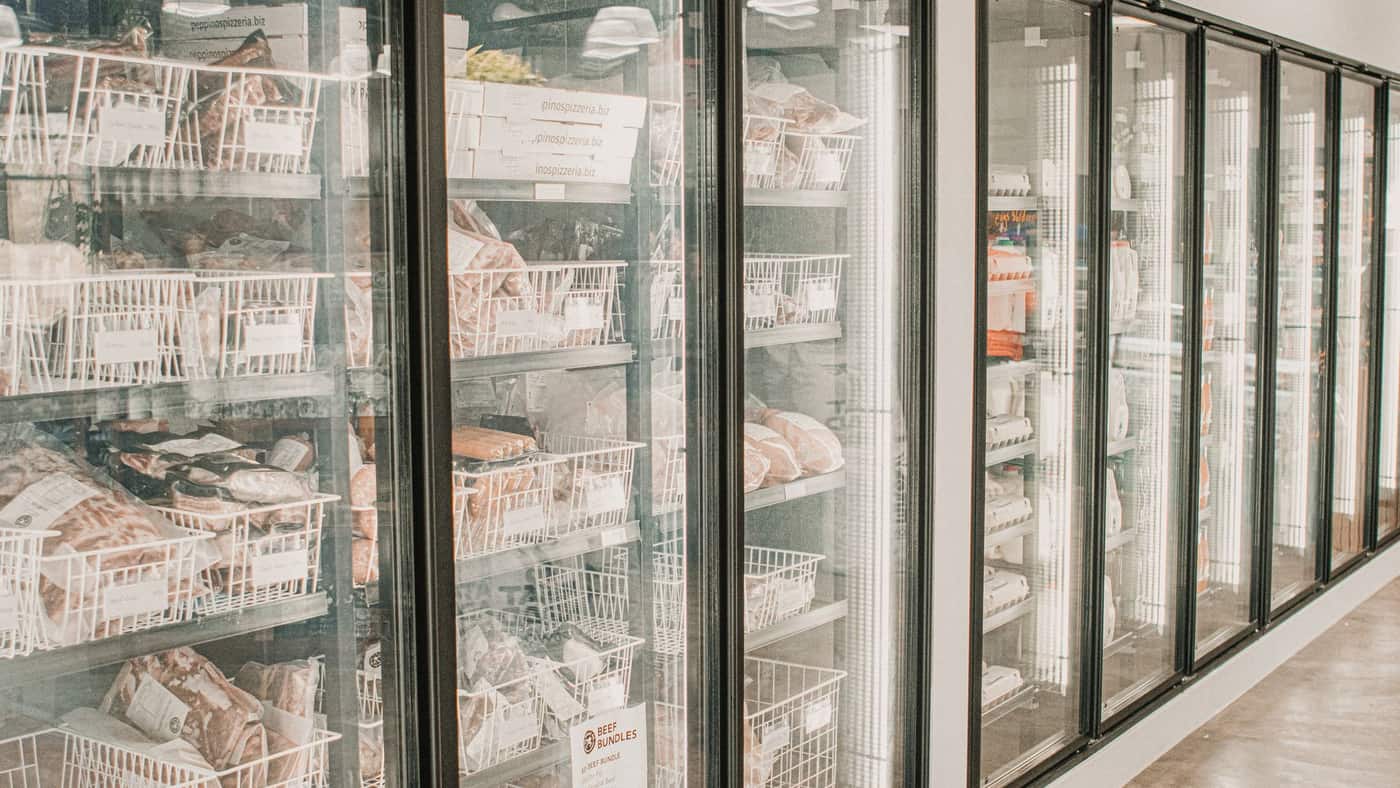
Arctic Air refrigerator and freezer repair in the Twin Cities
On-site repair for Arctic Air reach-in refrigerators, freezers, prep tables and back bar coolers in Minneapolis, Saint Paul and the surrounding suburbs.
What fails most often on Arctic Air reach-in refrigerators?
On Arctic Air reach-ins the usual culprits are a condenser coil packed with grease and lint, a door gasket that no longer seals, a seized evaporator fan motor, and a controller or probe that reads wrong. Most of these are repairable on site with common, widely available parts.
About Arctic Air equipment
Arctic Air is a value-priced line of commercial reach-in refrigerators and freezers, prep tables, chef bases and back bar coolers. The brand's listed address is in Eden Prairie, Minnesota, which is inside the area we serve. That is geography only: we are an independent repair company with no relationship to the manufacturer, and we are not its service network. Ask the dealer who sold the unit whether it is still under the manufacturer's warranty before you pay for a repair.
You find these units where the budget is tight and the kitchen is small: new restaurants, coffee shops, church and nonprofit kitchens, food halls, commissaries and convenience stores. Because the cabinets are built from common components and are sold mostly through dealers, most failures are ordinary reach-in refrigerator repair jobs. The pattern is that these boxes are asked to run in hot, greasy, crowded spaces they were never given clearance for, and the sealed system pays for it.
Arctic Air reach-in refrigerators
Equipment guide
Seen on this line: Condenser coil clogged with grease and lint / Evaporator fan motor noisy or stopped / Door gasket torn or hardened at the corners / Digital controller blank or probe reading off
On the bottom-mount models the condensing unit sits low in the cabinet, close to the floor where grease, flour dust and mop-water vapor get pulled through the condenser. A fouled coil pushes head pressure up, the compressor trips its overload, and the box drifts warm in the middle of lunch service. Cleaning the coil fixes the symptom. What makes it last is finding out why it clogged: no side clearance, a fryer next to the unit, or no one ever cleaning it. Beyond that we see evaporator fan motors seizing, gaskets torn at the hinge-side corners, and door hinges worn enough that a door rests ajar and loads the system all day.
Arctic Air reach-in freezers
Equipment guide
Seen on this line: Frost bank across the evaporator coil / Defrost heater open or sensor failed / Ice forming at the base of the door / Freezer cycling constantly yet not reaching setpoint
Freezer cabinets add a defrost circuit: a heater, a termination device or timed control, and a drain with its own heater. When a defrost heater opens, ice builds across the evaporator, airflow stops, and the cabinet warms while the compressor runs without a break. A thick frost bank over the coil with the fans turning is the giveaway. A failed drain heater is the other common cause: meltwater refreezes in the drain and spills out as ice at the bottom of the door. The repair is replacing the heater or sensor, then thawing the coil completely and confirming a full defrost cycle ends on its own. Chipping ice only buys a day.
Arctic Air prep tables and chef bases
Equipment guide
Seen on this line: Rail temperature climbs during service / Drawer gaskets hardened or slides binding / Condenser airflow blocked in a tight line / Rail fan not turning
A refrigerated prep table holds product in a rail fed by cold air from below, while a chef base puts drawers under a cooking line. Both work beside heat. Rail temperature goes out of range when the rail lid is left open, when pans are filled above the line so cold air cannot circulate, or when the condenser starves in a tight line. Chef bases collect grease and heat from the equipment above, so drawer gaskets harden and slides bind. On rail units the fan and the control probe are the first things to test. A thermometer in the pan, not the display, tells you what the product sees.
Arctic Air back bar coolers
Equipment guide
Seen on this line: Gasket sealed with dried spills / Condensate pan overflowing / Door no longer self-closing / Compressor compartment packed with dust
Back bar coolers take a different kind of abuse. Bottles go in warm, doors open all night, and spilled beer and syrup run down into the base. Sticky film on gaskets keeps doors from closing flush, the condensate pan overflows when the drain clogs, and the compressor compartment collects bottle-cap dust and paper. A sliding or swinging door that no longer shuts on its own is usually the first sign. On glass-door versions, condensation inside the glass points to a gasket or a door left cracked, not to a refrigeration fault.
Finding the model and serial plate
On Arctic Air reach-ins the data plate is usually on the interior wall of the cabinet or in the compressor compartment. It lists the model, serial number, refrigerant, charge weight, voltage and amperage. On many units the model starts with letters for the type, such as AR for refrigerators and AF for freezers, followed by a size number. Photograph it before you call. Newer units that use a flammable hydrocarbon refrigerant say so on it, and that changes how the sealed system is handled.
Parts
Arctic Air cabinets use widely used building blocks: hermetic compressors, common fan motors, standard digital temperature controllers and gaskets cut to the door size. Many of those parts have generic equivalents. Gaskets, hinge kits and control faceplates are best matched to the exact model and serial, so we read the plate first. Availability varies by part and supplier. We confirm the part number and what the supplier tells us before you approve the repair.
Manufacturer warranty
If this equipment is still under the manufacturer's warranty, it should usually go through the manufacturer's authorized service network first. We are an independent company and not the manufacturer.
See also
Arctic Air repair questions
Why does lettuce freeze against the back wall of my Arctic Air refrigerator?
In a forced-air cabinet, the coldest air leaves the evaporator at the back wall. Product pressed against it freezes if the setpoint is low, the probe is reading warm, or the defrost cycle is not releasing. Pull product off the wall first, then have the probe and setpoint verified against a thermometer.
Does a bottom-mount condenser really make the unit overheat faster?
It makes the coil easier to foul. Air is pulled in near the floor, where grease and dust settle, and the unit needs open space on its sides to exhale. If the cabinet is boxed in or sits near a fryer, the coil clogs sooner and head pressure rises. Keep the coil clean and the clearance open.
Can I swap in a controller from another brand?
Not by plugging it in. The probe type, relay rating, defrost settings and wiring have to match the cabinet, and a wrong parameter set can run a compressor short-cycled or a defrost never terminated. Order by the model and serial from the plate and let the replacement be programmed for that cabinet.
My unit says it uses a hydrocarbon refrigerant. Can anyone service it?
No. Federal law requires EPA Section 608 certification for anyone who opens a sealed refrigerant system, and hydrocarbon refrigerants are flammable, which adds handling requirements. Do not cut or braze lines yourself. Keep ignition sources away from a unit that is leaking and call for service.
Is it worth repairing a five-year-old budget reach-in?
It depends on what failed. Gaskets, fan motors, controllers and defrost parts are inexpensive relative to the cabinet and usually worth doing. A failed compressor or a leak in an evaporator is a different decision, so get the written diagnosis and weigh it against the cabinet's condition and use.