Restaurant equipment repair and commercial kitchen equipment repair in Minneapolis and St. Paul
On-site restaurant equipment repair and commercial kitchen equipment repair in Minneapolis, Saint Paul and nearby cities: refrigeration, ice and cooking.
Who repairs restaurant equipment from many different manufacturers?
An independent commercial service company can repair most restaurant equipment regardless of brand, on site, because the failures follow the same systems: refrigeration, heat, water, gas and controls. On a whole-kitchen call you approve a written price for each repair before the technician starts it. Units under manufacturer warranty usually go through the factory network first.
About commercial kitchen equipment repair
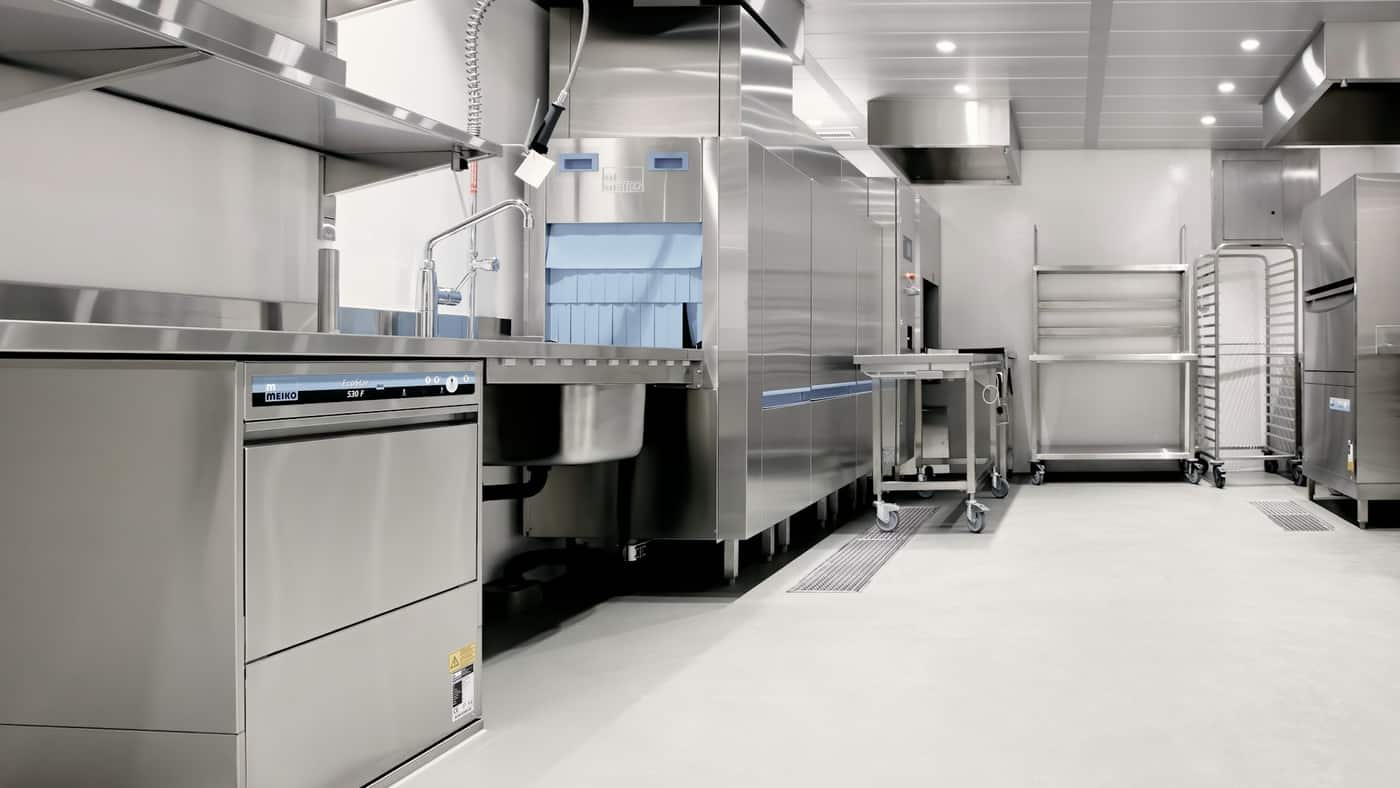
Restaurant equipment repair is the on-site repair of everything that keeps a working kitchen open: walk-in and reach-in refrigeration, ice machines, ovens, fryers, dish machines, mixers and coffee equipment. We come to your business in Minneapolis, Saint Paul and the cities around them, diagnose the unit where it stands, and give you a written price to approve before any repair starts. Most kitchens run equipment from many manufacturers, bought new and used over many years, and the failure that stops service is rarely the one on a maintenance schedule.
Commercial kitchen equipment repair also means finding where a problem really starts. A fryer that will not light may need an ignition part, or it may be low gas supply that belongs to the utility. A reach-in that runs warm may have a failing compressor, or a condenser clogged with grease from the line next to it. We sort that out before parts are ordered. Use this page to find your category, then open the page for your exact unit, such as commercial fryer repair or commercial refrigeration repair.
Kinds of commercial kitchen equipment we repair
- Refrigeration
Walk-in coolers and freezers, reach-ins, prep tables, bar coolers and display cases all share one sealed-system logic. Start at commercial refrigeration repair and follow the link to your box.
- Ice machines
Cube, flake and nugget machines fail on water, scale and condenser airflow far more often than on the refrigeration circuit. See ice machine repair.
- Cooking line
Ovens, ranges, fryers, griddles, charbroilers, steamers and holding cabinets, most of them gas or 208/240 volt. The overview at commercial cooking equipment repair sends you to each one.
- Warewashing
Door-type, conveyor and undercounter machines, glasswashers and disposals, where water temperature, chemical feed and drains decide whether a rack comes out sanitized. See commercial dishwasher repair.
- Food prep
Planetary mixers, slicers and other motor-driven prep tools, where belts, gears, guards and safety interlocks wear out. See commercial mixer repair and meat slicer repair.
- Beverage and frozen
Brewers, espresso machines, soft serve and frozen drink machines, all sensitive to water quality and cleaning. See commercial coffee machine repair and soft serve machine repair.
- Laundry
Washers and dryers in kitchens, hotels and care facilities handle towels, aprons and linens. See commercial laundry equipment repair.
Complaint, cause, correction
| Complaint | Likely cause | Correction |
|---|---|---|
| Several machines act up right after a power event | A voltage sag, a brownout or a lost leg on three-phase service can damage boards, contactors and compressor start components in more than one machine at once. Equipment with phase monitors will simply refuse to run until phases are correct. | Do not keep resetting breakers. We check incoming voltage at each machine, test the protection devices and replace only what failed. If the supply itself is wrong, that is a job for your electrician or the utility. |
| Gas equipment lights slowly or runs weak at peak hours | When every burner on the line fires at once, an undersized line or a failing regulator can drop manifold pressure below what the appliances need. The flame goes soft, recovery slows and spark ignition starts to miss. | We measure pressure at the appliance with a manometer, with the line loaded, and check orifices and burner condition. Pressure problems upstream of the appliance regulator are for the gas utility or your plumber, and we tell you plainly when that is the case. |
| Scale in ice machines, steamers, dish machines and brewers | Dissolved minerals bake onto water level probes, heating elements, spray arms and valve seats. Where supply water is hard, or a filter cartridge ran past its life, the same cause shows up in four different machines. | We descale to the manufacturer's procedure, replace the parts scale already ruined and look at the filter and softener setup. Fixing one machine without fixing the water brings the same call back. |
| Refrigeration struggles only when the line is cooking | Hot, greasy air from fryers and ranges is pulled across condenser coils on reach-ins and prep tables placed beside the cooking line. A condenser that can no longer shed heat runs long cycles, and the box drifts above 41°F. | We clean coils, check fan motors and look at where the unit sits relative to the heat. Sometimes the lasting fix is a few inches of clearance or moving a unit, which we will say before suggesting a replacement. |
| Floor drains slow down or back up around equipment | Dish machine discharge, ice machine melt water and condensate lines all end at the same drain. Fat, food solids and mineral scale narrow the line, and a standing drain breeds odors and slip hazards. | We check the equipment side: drain pumps, check valves, air gaps and condensate lines. Clearing or repairing building plumbing and grease interceptors is a plumber's job, and we will tell you if the blockage is past our scope. |
| Breakers trip at the start of the shift | Moisture in heating element terminals, a grounded element or a failing motor can pull a breaker only once equipment warms or after a wet cleanup. Several machines on one shared circuit make it hard to tell which one is guilty. | Switch off equipment on the tripped circuit and note which one trips it when brought back alone. We test insulation resistance and current draw to find the failing element or motor, and never advise bypassing a breaker. |
| Grease-coated controls, wiring and fan motors | Airborne grease settles on cooling fans, thermostats, switches and the back of control panels. It insulates motors so they overheat, and it holds dirt that causes intermittent faults. | We degrease the affected parts, test motors under load and replace what has already cooked. Intermittent faults that clear when a panel is cleaned are common, and we confirm with a test rather than assuming. |
| Steam and humidity killing electronics | Control boards, display panels and sensors sitting near dish machines, steamers and kettles take in moisture. Corrosion on connectors causes random error codes, lost settings and boards that fail in the wet season. | We inspect connectors and boards for corrosion, replace failed modules and seal or relocate what we can. A board swap on its own may fail again if the moisture path stays open. |
Check these before you call
- Check that the breaker or switch for the unit is on and that the cord is seated. Do not reset a tripped breaker more than once.
- Read the display and write down any error code and the unit's model and serial numbers from the data plate before you call.
- Look for clear causes you can see: a closed water supply valve, a blocked condenser grille, a door that is not sealing or a full drain.
- A gas odor anywhere on the line means everyone out first, then the utility or 911 from the sidewalk. Do not touch switches or try to relight anything.
- Move cold product out of any unit that is above 41°F into a unit that is holding temperature, and keep a written log of what you moved.
Stop at gas valves, 208, 240 or 480 volt wiring, sealed refrigerant circuits, steam under pressure and anything live. Those are a call.
While it is down
While a unit is down, protect product first. Move potentially hazardous food into working refrigeration, shorten the menu to what the remaining equipment can cook, and write down times and temperatures, because your inspector may ask. Keep doors closed on warm walk-ins to hold the cold you have. Call early rather than after the rush, and tell the dispatcher the make, model, symptom, error code and whether the unit is still under factory warranty. A clear description lets the right parts and tools come on the first visit.
Upkeep that prevents the calls
- Clean refrigeration condenser coils on a schedule matched to how greasy and dusty your kitchen is, and keep clearance around every unit.
- Replace water filters on the date the cartridge is rated for, and descale ice machines, steamers and brewers on a written schedule.
- Wipe door gaskets weekly and check that every door closes under its own weight and seals along its full length.
- Have burners, pilots, thermostats and high-limits on cooking equipment inspected and calibrated, since a thermostat that reads 25°F off makes food unsafe or burnt.
- Keep a log for every machine with model, serial number, install date and each repair, so repair or replace decisions use real history.
Repair or replace
A repair makes sense when one component has failed and the rest of the unit is sound. Replacement starts to win when a sealed system is leaking on an old unit, when parts are no longer made, or when repair costs begin to approach the price of a new machine that also uses less energy. Age matters less than history: a fifteen-year-old range with a new thermostat can outlast a three-year-old import with a failed board. Our repair or replace guide walks through the questions to ask before you decide.
Brands we repair
See also
Related repairs
Where it matters most
Where we repair commercial kitchen equipment
- Commercial kitchen equipment repair in New Hope, MN
- Commercial kitchen equipment repair in Oakdale, MN
- Commercial kitchen equipment repair in Plymouth, MN
- Commercial kitchen equipment repair in Prior Lake, MN
- Commercial kitchen equipment repair in Ramsey, MN
- Commercial kitchen equipment repair in Richfield, MN
- Commercial kitchen equipment repair in Rosemount, MN
- Commercial kitchen equipment repair in Roseville, MN
- Commercial kitchen equipment repair in Saint Paul, MN
- Commercial kitchen equipment repair in Savage, MN
- Commercial kitchen equipment repair in Shakopee, MN
- Commercial kitchen equipment repair in Shoreview, MN
Commercial kitchen equipment repair questions
Which broken machine should I fix first when several are down?
Fix the one that threatens food safety or the whole menu first. A warm walk-in comes before a slow griddle, because product loss is permanent and a cooking problem can be worked around. Tell us everything that is down and we will help sequence the visit by risk.
Do you repair exhaust hoods, and what about fire suppression?
We repair the hood and its ventilation: exhaust fans, make-up air units, filters, lights and controls, covered on our hood and ventilation service page. We do not service fire suppression systems, and grease cleaning of hoods and ducts to NFPA 96 goes to a certified hood cleaning company.
How can I tell whether a problem is the equipment or the building?
If several machines fail together, or a gas appliance runs weak while others on the line run weak too, suspect gas supply, voltage or plumbing. A single machine with the same symptom as before, or an error code, points to the machine. We test both before recommending a part.
What should I keep after a repair for a health inspection?
Keep the written invoice with the date, unit model and serial number, the fault found and the part replaced. For refrigeration, keep temperature logs from the outage. An inspector wants to see that a failure was found, fixed and verified, and the paperwork shows it.
Is it cheaper to replace a whole old line at once or one piece at a time?
Replacing piece by piece spreads cost, but an old line fails in clusters, often because of shared causes such as heat, grease or poor water. Look at repair history for each unit and replace the ones that keep failing. Fix the shared cause or the new equipment will suffer the same fate.
Can you repair equipment I bought used or from a restaurant auction?
Often yes, provided the model plate is legible and parts are still made. Check that gas type, voltage and phase match your building before it is installed, because those cannot be swapped on site. Send us the model and serial number and we will tell you if parts are available.