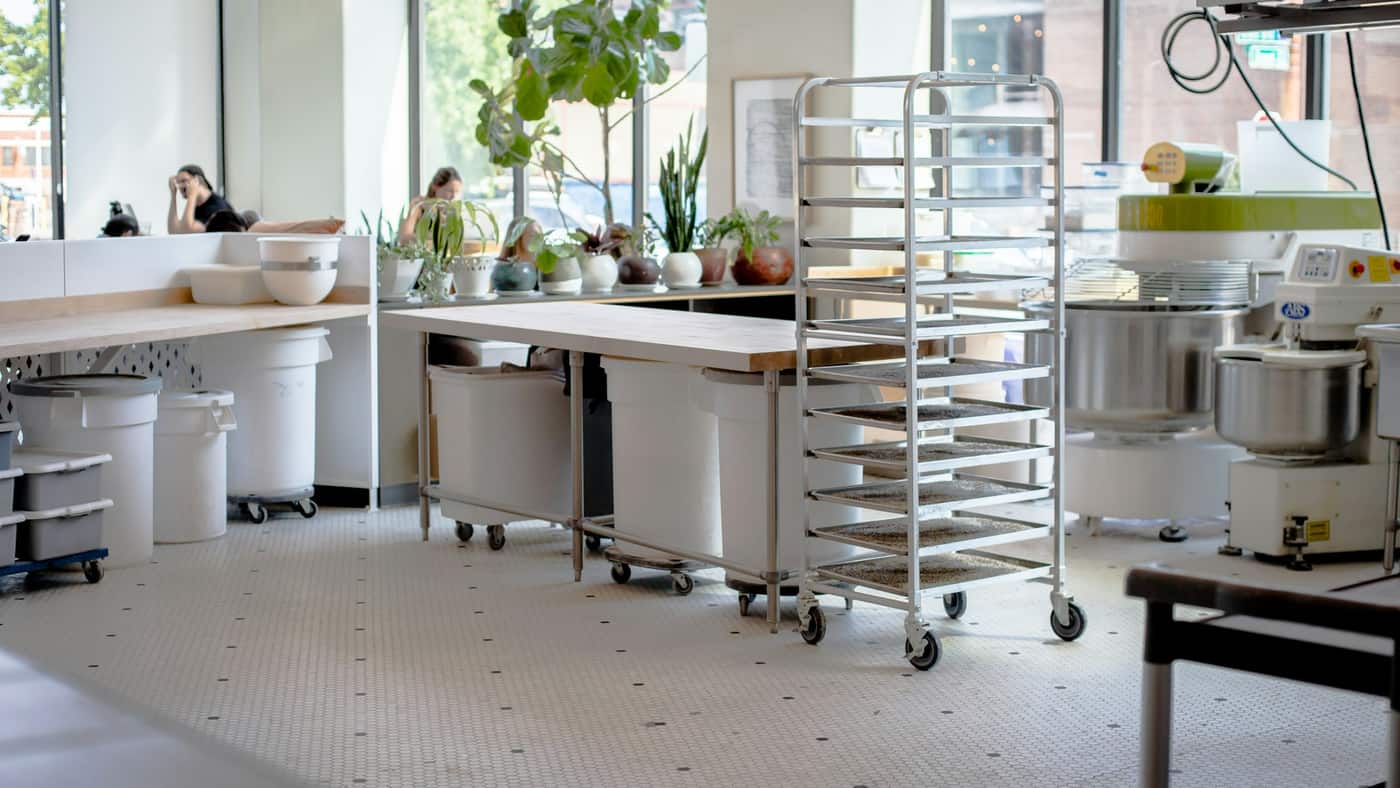
Commercial mixer repair in Minneapolis and St. Paul
Repair of planetary and spiral commercial mixers: gear transmissions, bowl lift, speed shifting, safety interlocks, overloads and bakery spiral mixers.
Why won't my commercial mixer start, shift speeds or turn the attachment?
A mixer that will not start is usually waiting on an interlock: the bowl guard, the bowl lift position or a timer fault. If it starts but will not turn the beater, the gear transmission, a sheared drive component or a slipping belt is the cause. Speed changes on gear-driven mixers must be made only when it is stopped.
About commercial mixer repair
A commercial mixer carries the heaviest load in a bakery or pizzeria. Dough puts a constant strain on the motor, the transmission and the bowl lift, and a mixer that stops mid-batch can cost a full prep, a stalled bread order and a line waiting on dough. Planetary mixers, with a bowl that raises into the beater, and spiral mixers, which turn the bowl against a fixed spiral hook, wear in different places and fail in different ways. A prep room that also runs a meat slicer has two machines with guards and interlocks that decide whether either will start.
We repair mixers on site, from countertop models to floor-standing 60 and 80 quart machines, and give you a written price before we order parts. The bakery side of the equipment, including proofers and sheeters, is on our bakery equipment repair page. This page covers what fails on the mixer itself: the gearbox, the bowl lift, the interlocks, the overload and the controls. If you can tell us what the mixer does when it stops, we can usually narrow it down before we arrive.
Kinds of commercial mixers we repair
- Planetary mixers
A beater travels around a fixed bowl. A gear-driven transmission or belt-and-pulley drive sits in the head, and the bowl lift is a lever or motor-driven arm that has to land in the correct position.
- Spiral mixers
A fixed spiral hook with a rotating bowl, used for dough. Separate motors or belts drive the bowl and the hook, and a bowl rotation fault is different from a hook fault.
- Gear-driven mixers
Speed is changed by sliding gears. Speed must be changed only with the mixer stopped, or the gears can be damaged.
- Variable-speed mixers
A belt or electronic drive adjusts speed under load. Drive belts, a speed control board or an inverter are the likely repair parts.
- Countertop and benchtop mixers
Smaller planetary models with attachment hub. Hub and gear wear are common because they get pushed with stiff dough.
Complaint, cause, correction
| Complaint | Likely cause | Correction |
|---|---|---|
| Will not start at all | A safety interlock is open: the bowl guard, the bowl lift not fully raised, or a failed magnetic or limit switch. A dead timer or an open overload also stops it. | Check that the guard is seated and the bowl is all the way up. The tech then meters the interlock and the timer circuit. |
| Hums but the beater does not turn | A stripped or broken gear in the transmission, a sheared drive pin, a slipping belt, or a failed motor start capacitor. | Power off. The tech opens the head to check gears, key and coupling. The capacitor is tested separately. |
| Trips the overload during heavy dough | The load is above the machine's rating, the motor is weak, or the belt and transmission are binding. | Check batch size against the manual. If it trips on a normal batch, the tech measures the motor amps and examines the drive. |
| Will not change speed or grinds shifting | Speed was changed while running, or the shift fork or gear is worn. Gear-driven mixers must be stopped before changing speed. | Stop the mixer and shift only when the beater is still. A worn shift fork or damaged gear teeth are replaced. |
| Bowl will not lift or drops by itself | A worn lift mechanism, loose pivot, stripped lift gear or a failed bowl-lift motor on powered models. | The lift linkage and gears are inspected and rebuilt. We do not work under a bowl that is not secured. |
| Grease leaks from the head or into the bowl | A failed shaft or planetary seal letting transmission oil or grease seep out and drip into the food zone. | The seal is replaced and the transmission is regreased with the correct food-grade product. A leak into the bowl means the batch is contaminated. |
| Beater scrapes the bowl or rattles | The beater is the wrong size, the planetary shaft is loose or worn, or the bowl is not seated on its pins. | The beater-to-bowl clearance is reset. A worn planetary shaft or bushing is replaced. |
| Spiral mixer: bowl turns but hook does not, or reverse | A hook drive belt or chain is slipping or broken, or a contactor controlling the separate motors has failed. | Each motor and its contactor is tested. The belt or chain is replaced and tension reset. |
| Timer or speed display is dead | A failed control board, a blown fuse in the control circuit, or a loose connection after vibration. | We test the control supply voltage, then the board. Boards are replaced with the matching part number. |
Check these before you call
- Confirm the bowl guard is fully closed and the bowl is lifted all the way to its stop. These are the most common interlocks.
- Check the breaker and, on a floor model, the wall disconnect. Look at the display or timer for a fault.
- On a gear-driven mixer, make sure the speed selector is fully in a gear and was not moved while running.
- Check batch size against the mixer's rated capacity. Overloading with stiff dough trips the overload.
- Look for oil or grease dripping from the head or bowl guard area. Leaking transmission grease is a stop-and-call sign.
Stop at gas valves, 208, 240 or 480 volt wiring, sealed refrigerant circuits, steam under pressure and anything live. Those are a call.
While it is down
If the mixer is down, move the work to another machine in smaller batches, or make dough by hand in the short term. Do not keep forcing a mixer that trips its overload. If grease is dripping from the head, discard anything that was in the bowl and clean the bowl and attachment before it is used again. When you call, tell us the make, model, capacity and drive type, and whether it hums, shifts, or trips. Photographs of the nameplate and of the head are enough to start sourcing parts.
Upkeep that prevents the calls
- Keep to the rated batch size, and use the lower speed for dough and the higher ones only for light mixes.
- Change gear speeds only while the mixer is stopped on gear-driven models.
- Grease the planetary and transmission on the manufacturer's schedule with the correct food-grade grease.
- Wipe the bowl guard, interlock switch and lift area so flour dust does not foul them.
- Inspect belts and check the bowl lift for play, since both degrade slowly and fail under load.
Repair or replace
A mixer with a worn seal, belt, interlock or capacitor is a good repair candidate, and a gear-driven mixer can run for decades with a rebuild. A cracked transmission housing, stripped planetary gear case or a motor failure on a smaller machine can make replacement the better spend. Consider how central the mixer is to production before you decide. Our guide on repairing or replacing restaurant equipment lays out the questions.
Brands we repair
See also
Where we repair commercial mixers
- Commercial mixer repair in Inver Grove Heights, MN
- Commercial mixer repair in Lakeville, MN
- Commercial mixer repair in Lino Lakes, MN
- Commercial mixer repair in Maple Grove, MN
- Commercial mixer repair in Maplewood, MN
- Commercial mixer repair in Minneapolis, MN
- Commercial mixer repair in Minnetonka, MN
- Commercial mixer repair in New Brighton, MN
- Commercial mixer repair in New Hope, MN
- Commercial mixer repair in Oakdale, MN
- Commercial mixer repair in Plymouth, MN
- Commercial mixer repair in Prior Lake, MN
More food prep repair
Commercial mixer repair questions
Why must I stop a gear-driven mixer before changing speeds?
On a gear-driven mixer, changing speed slides gears into mesh. If the gears are turning, the teeth clash and chip. That damages the transmission quickly. Stop the mixer fully, shift, then restart. Variable-speed mixers adjust under load and are built for it.
What is the difference between a planetary and a spiral mixer?
A planetary mixer's beater moves around a fixed bowl and handles batters, icings and some doughs. A spiral mixer keeps a fixed hook and spins the bowl, which suits bread dough. Because the drives differ, the failures differ too.
Why does my mixer stop when I lift the bowl guard?
The guard is wired to an interlock switch that cuts power when open. That is a safety feature, not a fault. If it stops with the guard closed, the switch may be misaligned or have failed and needs checking.
Why does grease show up on the bowl or beater?
A worn planetary or shaft seal lets transmission grease creep down to the beater shaft. That contaminates food. Stop using the mixer, have it opened and resealed, and clean the bowl and attachments before the next batch.
Can a bowl lift that drops by itself be adjusted?
Sometimes. A loose pivot, a stripped lift gear or a worn lift detent can all cause it. The bowl must be secured before anyone works around it. The tech inspects the linkage and replaces worn parts rather than shimming around them.
How do I know a spiral mixer's belt is slipping?
The bowl or hook turns slowly under load, you hear squealing, or the hook stalls while the motor runs. The belt wears, stretches or glazes. Replacing it and resetting tension is a quick repair compared with letting it burn out the pulley.