Meiko dishmachine repair in the Twin Cities
Meiko hood-type, conveyor and pot washer repair in the Twin Cities: M-iClean, flight and rack machines, heat recovery, pumps, sensors and control faults.
What fails most often on Meiko dishmachines?
Meiko machines are built tight, so most failures are water-side: scaled heaters and rinse nozzles, clogged filters and strainers, drain pump faults, and dosing problems. Sensors, door or hood switches and conveyor parts wear on heavy-duty models. A Meiko that quits with a fault code usually has a sensor or water-path problem.
About Meiko equipment
Meiko is a family-owned German company based in Offenburg that builds commercial warewashing equipment for large operations. Its machines are the ones you find in hospital and senior-living kitchens, hotel dish rooms, university dining and larger restaurants that wanted European-style efficiency: the M-iClean hood and undercounter machines, flight-type and rack conveyors, and utensil and pot washers.
Meiko designs lean on filtered wash water, tank management and heat recovery, so the service work differs from an older American-style machine. Fault history lives on the control, sensors run the cycle, and water use is managed by the machine rather than by a lever. That precision is the strength of the design and the reason a cheap parts substitution rarely works. For a commercial dishwasher of this kind we read the control's fault log before touching anything, and the same applies to Meiko glasswashers.
Meiko M-iClean hood and undercounter machines
Equipment guide
Seen on this line: Wash filters and strainers clogged, weak spray / Level or temperature sensor fault stopping the cycle / Rinse nozzles scaled, spray pattern poor / Dosing signal or pump failing
The M-iClean line covers undercounter, hood-type and larger pass-through machines on a touch or button control that shows status and stores faults. The machines filter the wash water through screens and a tank filtration system, so the filters and strainers need daily cleaning, and a clogged filter starves the pump and shows up as a weak wash. Water sensors, level controls and temperature probes run the cycle, and a failed probe stops the machine with a fault rather than a bad wash. Rinse nozzles scale, and hood switches wear. Dosing for detergent and rinse aid is typically integrated, so a lost dosing signal affects results.
Meiko conveyor and flight-type machines
Equipment guide
Seen on this line: Drive belt or chain slipping or stalled / Zone pump or tank heater failing / Dryer fan or heat exchanger scaled or clogged
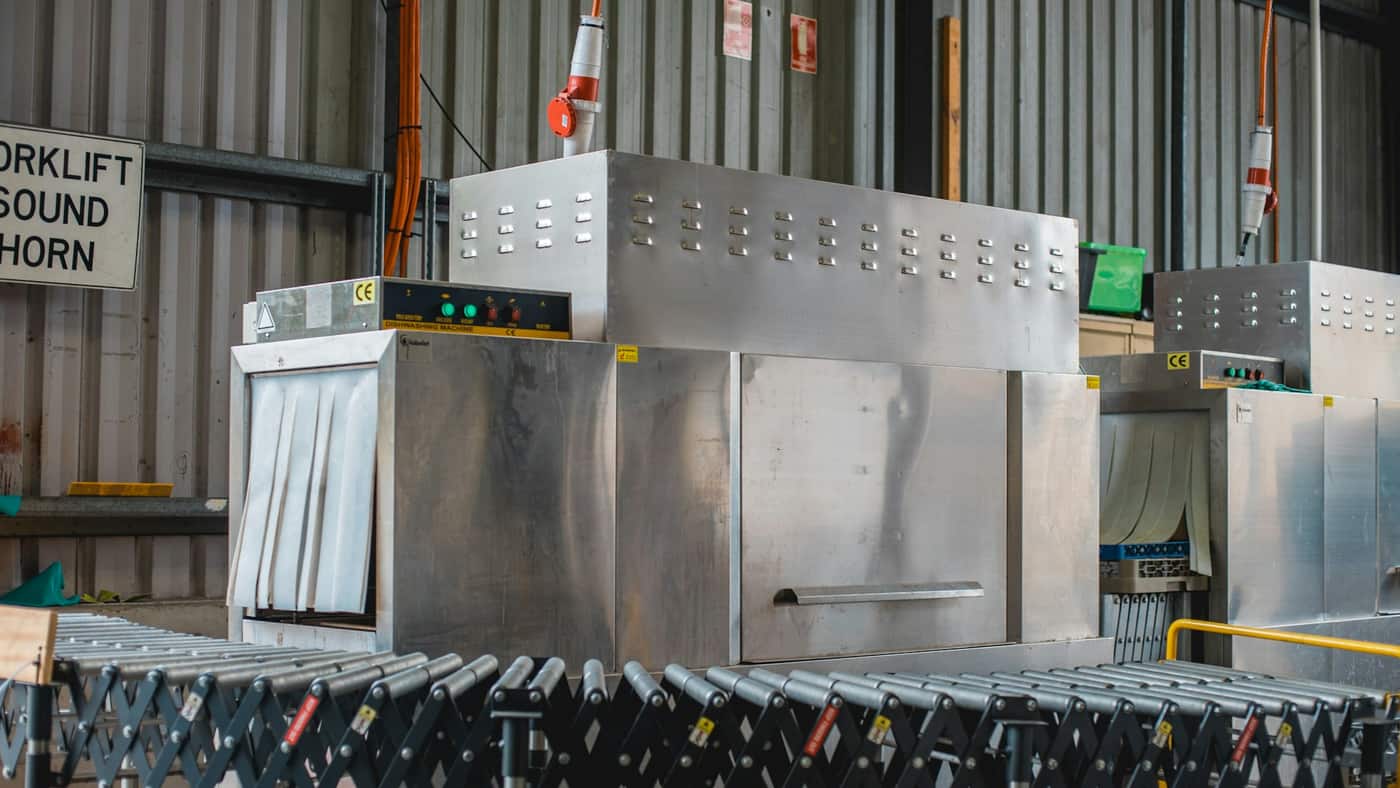
Meiko conveyor machines handle racks or flights of dishes on a continuous belt, with pre-wash, main wash, rinse and a final rinse stage. The drive motor, belt or chain and the tensioning parts are the high-wear items. Each zone has its own pumps and tank heaters, so a single failed heater or pump will show up as a specific zone fault, not a general breakdown. Drying zones add fans and heaters, and the heat recovery option adds a heat exchanger that needs to stay clear of lime.
Meiko utensil, pot and glass washers
Equipment guide
Seen on this line: Wash arms clogged by heavy soil / Scale reducing heater and spray performance
Meiko pot and utensil washers are used for heavy soil: sheet pans, mixing bowls and stock pots, and wash arms and the pump are worked hard. Glass models see the usual bar-side soils: beer film, lipstick and citrus pulp that clog screens. Hard-water scale is the most common cause of poor results across all of these machines, and it attacks the heater first because the element runs hottest. Meiko tank heaters and sensors are designed to be accessed for descaling, so a regular descale cycle is the practical protection. Where a fault code appears, record it before resetting the machine.
Finding the model and serial plate
The rating plate is on the machine's side or front panel, usually near the control. Read the full model designation, the serial number, the electrical supply and any heat-recovery or dosing options listed. Meiko ships machines with different option packs, so the serial number tells us what you have. A photo of the plate and any fault text on the control display saves a trip.
Parts
Meiko parts come through its dealer and service network, and its machines are built with proprietary pumps, sensors, control boards and heat-exchange components. Common wear items like door seals, filters, nozzles and curtains are widely stocked, while boards and pumps are model specific. We will confirm the part number from the plate and serial number rather than ordering by series name.
Manufacturer warranty
If this equipment is still under the manufacturer's warranty, it should usually go through the manufacturer's authorized service network first. We are an independent company and not the manufacturer.
See also
More warewashing brands
Meiko repair questions
Why does my Meiko machine stop with a fault when dishes look clean?
Meiko machines monitor temperature, water level and flow, and they stop when a sensor reads out of range, even if cleaning was fine. A failed probe, a clogged filter reducing flow, or a level sensor coated in scale is typical. Write down the fault text and call us with it.
How often should I clean the filters on a Meiko machine?
Clean the tank filters and strainers every service day or per shift in heavy use, since the machine recirculates wash water and relies on clean filters for pump flow. A clogged filter causes a weak wash and pump strain. The manual states the cleaning routine for your model.
What does the heat recovery option do?
On machines that have it, a heat exchanger takes heat from the exhaust steam and warms incoming water, cutting the energy the heater needs. It also reduces the steam released into the room. The exchanger can scale or clog, so it needs periodic descaling and an inspection.
Is a Meiko machine harder to service than an American one?
The principles are the same, but components, control logic and part numbers differ. A technician needs the service documentation for the model, and the fault log makes diagnosis faster when read properly. Standard plumbing and wiring work is no different.
Can hard water damage a Meiko dishmachine?
Yes. Scale builds on heaters, level sensors, rinse nozzles and any heat exchanger, and it makes the machine work harder for worse results. Water treatment sized to the supply is the main preventive measure, and descaling should follow the manufacturer's recommended interval.