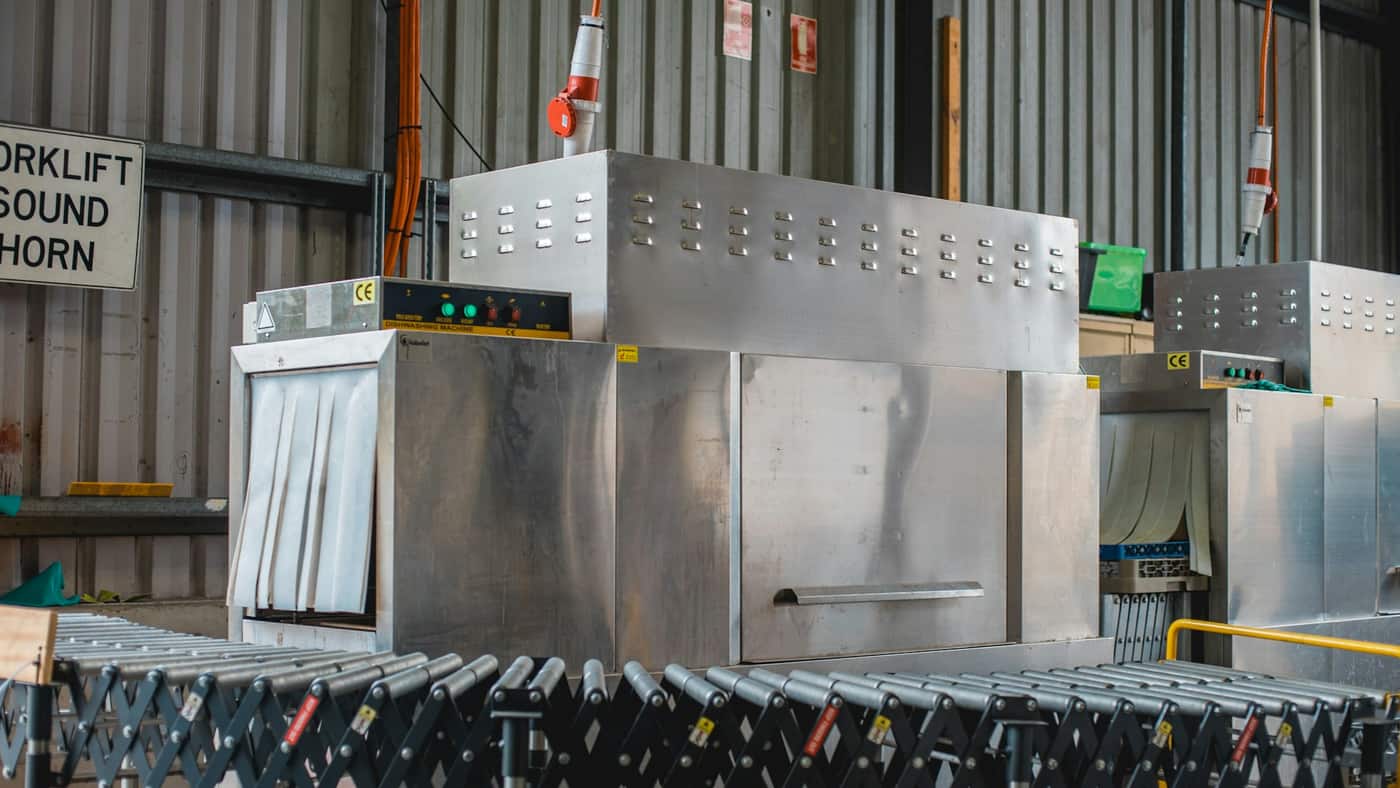
InSinkErator commercial disposer repair in the Twin Cities
On-site repair of InSinkErator commercial food waste disposers in the Twin Cities: jams, seals leaking at the motor, tripped overloads and no-water faults.
Why does my InSinkErator commercial disposer keep jamming or tripping out?
Repeated jams usually mean bones, utensils or hard fibrous waste are binding the grind ring or impellers, or the starter overload is tripping because cold water flow is low, the supply voltage is off on one leg or the motor is failing. Cold water must run whenever the unit grinds. Persistent trips need a technician with a meter.
About InSinkErator equipment
InSinkErator is the name most kitchen staff use for any disposer, and it is the one under the pot sink, the scrapping trough or the dish table in most commercial kitchens. The foodservice line is made by InSinkErator, which has been part of Whirlpool Corporation since 2022 and is based in Mount Pleasant, Wisconsin. The commercial models are the SS series, rated up from the small SS-100 through the SS-200 and SS-300 to the larger SS-500 and SS-1000. Those are heavy cast and stainless units with a three-phase or single-phase motor, not the household units sold at hardware stores.
In the Twin Cities you find them on commercial dishwasher lines in school kitchens, hospital and senior living dish rooms, hotel back-of-house, corporate cafeterias and busy restaurants that scrape plates into a trough. This page covers the disposer itself. If you want the broader category, see commercial garbage disposal repair. What makes a disposer different from other kitchen equipment is that it fails from what goes into it and from the water that runs through it, so the diagnosis starts at the hopper and the cold water supply, not at the motor.
SS series foodservice disposers
Equipment guide
Seen on this line: Water dripping from the lower housing or motor base / Hums and will not turn, or turns slowly and trips / Coarse output or fibrous waste backing up the drain
The SS series is built around a vertical motor, a rotating plate with swivel impellers and a stationary shredder ring that sets the grind. Food is forced against the ring until it is small enough to pass. The wear items are the swivel impellers, the shredder ring, the upper and lower shaft seals and the mounting gasket where the unit hangs from the sink flange. A leak at the base of the housing is a seal problem that lets water down the shaft toward the bearings and the motor windings. A humming motor that will not turn means something wedged between the plate and the ring, or a seized bearing. Chronic overload trips often trace back to a jam that was cleared by force, a failing winding or low supply voltage on a three-phase unit. The model suffix after the SS number identifies hopper style and electrical options.
Disposer control packages and water supply
Equipment guide
Seen on this line: Overload trips after a few seconds of grinding / No water flow while the unit runs / Starter chatters, buzzes or will not pull in
A foodservice disposer needs cold water flowing while it grinds, and that is why most of them are sold with a control package: a start and stop station, a magnetic starter with overload protection and a cold-water solenoid valve. When the solenoid sticks closed or its strainer clogs with scale, the disposer runs dry, heats up and the overload opens. When the starter contacts pit, the unit starts erratically or hums on two phases. Minneapolis and St. Paul water is moderately hard, so inlet screens and solenoid seats collect mineral. We test supply voltage on each leg, the starter coil, the overload setting against the motor plate and the solenoid before blaming the grinder. Hot water into a disposer is a common installation mistake because it melts fats that re-solidify downstream and clog the drain line.
Finding the model and serial plate
The model and serial number are on the data plate on the motor housing or lower body of the unit. The full model number matters, not just SS-200 or SS-300, because the letters after it describe hopper size and electrical configuration. Have the voltage and phase from the plate ready, the hopper or trough type, and whether a control package sits on the wall nearby. A photo of the plate and of the control panel saves a repeat trip.
Parts
Seals, impellers, shredder rings and gaskets are normally sourced as manufacturer parts matched to the full model number, since a different hp rating or hopper style changes the dimensions. Control components such as magnetic starters and solenoid valves may have equivalents from other makers once ratings are matched. We confirm the part number against the plate before ordering, and electrical parts are chosen by voltage and amperage, not by what the unit looked like.
Manufacturer warranty
If this equipment is still under the manufacturer's warranty, it should usually go through the manufacturer's authorized service network first. We are an independent company and not the manufacturer.
See also
InSinkErator repair questions
Can I clear a jam in an InSinkErator disposer by hand?
Only with the power locked off at the breaker or the control station and the starter proven dead. Never put a hand into the hopper. Most commercial units have a way to turn the plate by a bar from the outside; use that after the power is off. If the jam returns, the ring or impellers are damaged.
Why does my disposer trip the overload only when the dish pit is busy?
Heavy continuous loads and a restricted cold water supply both heat the motor. If it only happens at peak, check that the solenoid is opening fully and the water pressure is steady. If the overload is tripping on light loads too, the motor or its supply voltage needs measuring.
What should not go into a commercial disposer?
Bones, shellfish shells, corn husks, fibrous trimmings, fats and oils poured in bulk, and anything metal or ceramic. The impellers and shredder ring are rated for food waste, not for utensils. Silverware in the hopper is the most common cause of a ruined ring.
Is the leak at the bottom of the disposer a seal or a drain?
Dry the housing and run the unit for a minute. A leak that appears at the lower shaft area after grinding points to a seal. Water at the flange or the drain collar is the gasket or the connection. A seal leak should not wait because water can reach the motor.
Why does the disposer smell even after cleaning?
Grease and waste collect under the plate and in the scrapping ring where a brush does not reach, and in the drain line that follows. A seal weeping slightly also holds odor. We check the underside and the connection before treating it as a drain issue.