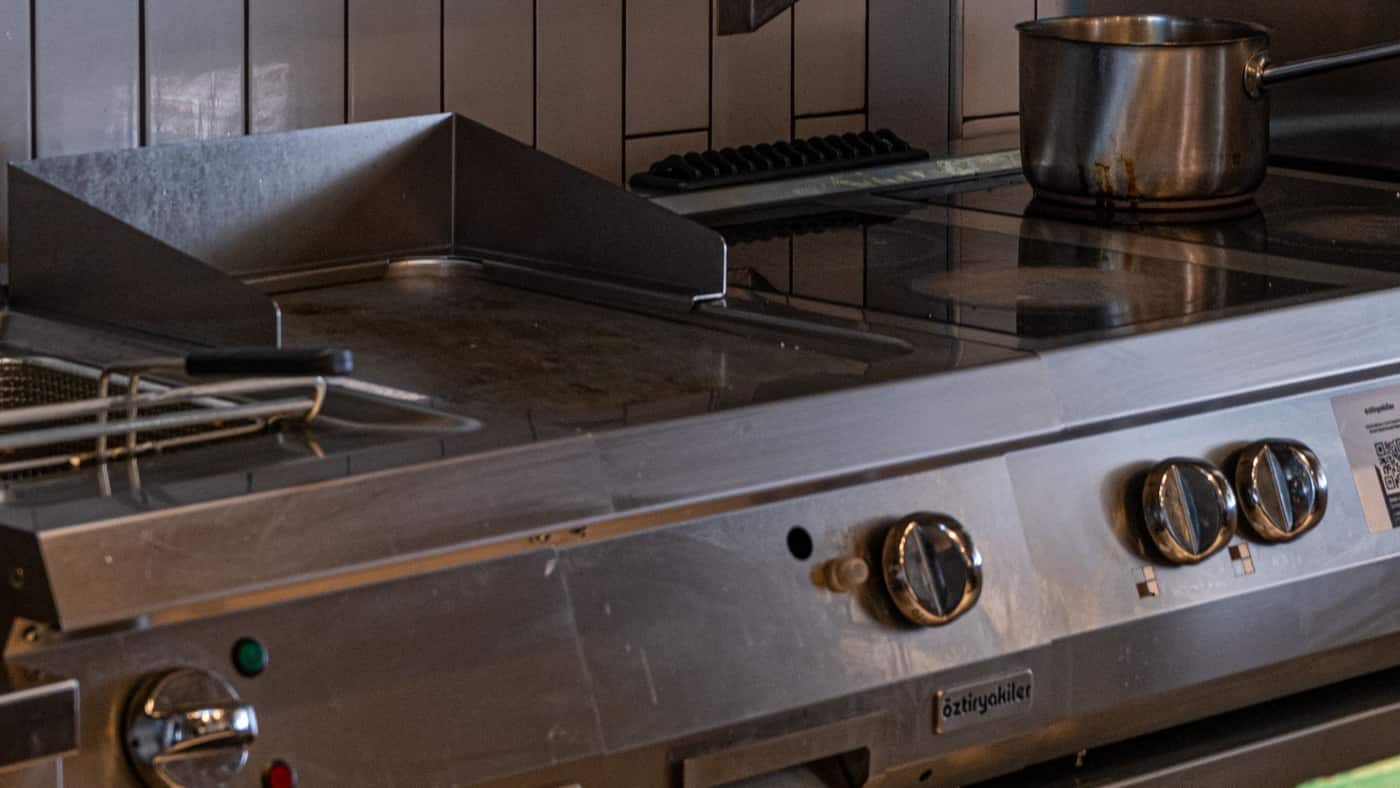
Garland range, oven, griddle and salamander repair in the Twin Cities
On-site Garland range, convection oven, griddle and salamander repair in Minneapolis and St. Paul. A written price to approve before work starts.
What fails most often on Garland ranges and ovens?
On Garland equipment the common failures are clogged burner ports and pilot orifices on ranges, thermostat and oven-valve problems on the bake side, tired blower motors and door seals on convection ovens, and failed ignition on salamanders and cheesemelters. Many of these are old, repairable units where cleaning and a small part restore the equipment.
About Garland equipment
Garland is a long-running name in heavy-duty restaurant cooking, with ranges, griddles, charbroilers, salamanders and convection ovens built for the cook line. Today it is a Welbilt brand, and Welbilt has been part of Ali Group since 2022, alongside brands such as Cleveland, Frymaster and Lincoln. You will see Garland on the line in many Twin Cities independent restaurants, steakhouses, school kitchens and hotel back-of-house, usually as a range with a griddle section or a bank of salamanders.
What sets Garland repairs apart is how much of the equipment is old gas cooking with a standing pilot, a thermostat on every section, and almost nothing electronic. A Garland range is often a commercial range with several open burners, a griddle and an oven, all fed by one gas supply and all failing in different ways. We also work on Garland griddles, salamanders and convection ovens, and the first question on any of them is usually which section of the gas train has stopped doing its job.
Garland restaurant ranges
Equipment guide
Seen on this line: Open burner weak, yellow flame or poor lighting / Oven thermostat off or oven running hot / Pilot assembly dirty or thermocouple weak / Valve stem sticking or leaking gas
Garland restaurant ranges such as the Master Series, Starfire Pro and the U Series are heavy cast-iron machines with open burners, French tops or griddles on top and a standard or convection oven below. Pilots are lit per burner on many models, and oven bake burners have their own pilot and safety. Calls come from clogged ports and pilot orifices, weak burners from boil-over and grease, an oven that will not hold temperature because of a failing thermostat, and gas valves that stick or leak at the stem. Cast-iron grates and burner bodies crack from heat cycling and spills. Where an oven is used heavily as a hot holding cabinet, the door gasket and hinges wear out first.
Garland convection ovens
Equipment guide
Seen on this line: Blower noisy, slow or seized / Door switch stuck so the fan is dead or always on / Hot spots from a leaking door gasket / Gas ignition drops out after lighting
Garland's MCO convection ovens are full-size ovens with a two-speed blower, a door switch and either a gas burner with ignition control or electric elements. The usual failures are the blower motor and its bearings, the door switch and the thermostat. A noisy or slow blower is a motor bearing or a loose wheel on the shaft. A worn door gasket lets heat escape and causes uneven baking. If the oven lights but drops out on the gas model, look at flame sensing and the pilot safety. Owners often ask for a repair when the real issue is a clogged flue or a worn gasket, so we start there.
Garland griddles
Equipment guide
Seen on this line: One section cold while the rest heat / Thermostat sections out of calibration / Burner plugged with grease or carbon / Warped plate or leaking grease trough
Garland griddles are built in thermostat sections, so one section can be dead while the rest of the plate works. Each section has its own burner, pilot or igniter, and a thermostat with a capillary bulb under the plate. Uneven heat across the top comes from a failed section thermostat, a plugged burner or a warped plate. Grease running down the front damages knobs and valves. A plate that heats well but cooks light on one side may be fine; check the gauge before replacing parts. A control knob that turns stiffly is a sign the valve behind it is gumming up and should be looked at before it sticks open. We repair the section, not the whole machine, wherever we can.
Garland salamanders and cheesemelters
Equipment guide
Seen on this line: Only part of the burner lights / Cracked or plugged burner tiles / Pilot or igniter will not stay lit / Valve or control knob stuck
Salamanders and cheesemelters use infrared burners at the top of the cabinet to finish plates. The weak points are the burner tiles that crack or clog, the pilot or igniter that loses its flame, and the thermostat or valve that stops regulating. A cheesemelter that lights only part of its width has a blocked burner section. Mounted above the line, the unit takes steam and grease, which reach the controls and the gas valve. A cheesemelter that has been run with the front grease tray full will often show scorched knobs and a valve that turns hard. If it smells of gas, leave the area and call the gas utility.
Finding the model and serial plate
Garland equipment carries a data plate with the model number, serial number, gas type and BTU input or electrical rating. On ranges it is generally on the inside of the front frame or behind the kick panel; on convection ovens it is on the side panel or inside the control area. Have the model, serial number and fuel type ready, along with what failed. If the plate is worn, a clear photo of the frame number helps us identify the unit.
Parts
Garland parts come through the manufacturer's parts channel, and many wear items such as pilot assemblies, thermostats, gas valves, door switches and blower motors are available in OEM and compatible versions. Cast-iron grates, burner bodies and thermostat sections vary by model and age. A specific control or valve for a discontinued unit can take longer. We confirm the model and serial number before ordering so the part matches the gas type.
Manufacturer warranty
If this equipment is still under the manufacturer's warranty, it should usually go through the manufacturer's authorized service network first. We are an independent company and not the manufacturer.
See also
Compared with
Guides
Garland repair questions
Why is only one section of my Garland griddle heating?
Each section has its own burner and thermostat. A dead section is usually a failed thermostat, a plugged burner or a pilot that went out. The rest of the plate keeps working, which is why people notice it late. A technician tests the valve and thermostat for that section before replacing anything.
My Garland oven pilot keeps going out. Can I relight it myself?
Follow the lighting instructions on the unit only if there is no gas smell. If the pilot keeps dropping, the thermocouple is weak or the pilot flame is small from a dirty orifice. Repeated relighting is not a fix. On a Garland, gas odor means leave and let the utility handle it. Our pilot light guide lists safe checks.
Why does my Garland convection oven bake unevenly?
Uneven baking is usually airflow. A slow or worn blower motor, a loose blower wheel, a bent baffle or a leaking door gasket all change how air moves over the racks. Overloaded racks and blocked vents cause the same result. A technician checks the blower speed and door seal first.
Do cheesemelters and salamanders wear out faster than the rest of the line?
They work harder and take more steam and grease, so burner tiles and valves wear sooner than ranges below. Keeping the burner ports clean and not blocking the vent helps. A burner section that stays dark is a repair, not a replacement.
Is a thirty-year-old Garland range worth repairing?
Often it is. The castings last, and valves, pilots and thermostats are parts that can be replaced. It stops making sense when the frame is rusted through, a casting is cracked in a way that matters, or the cost of the parts approaches a new unit. We look at the repair against the machine's condition.