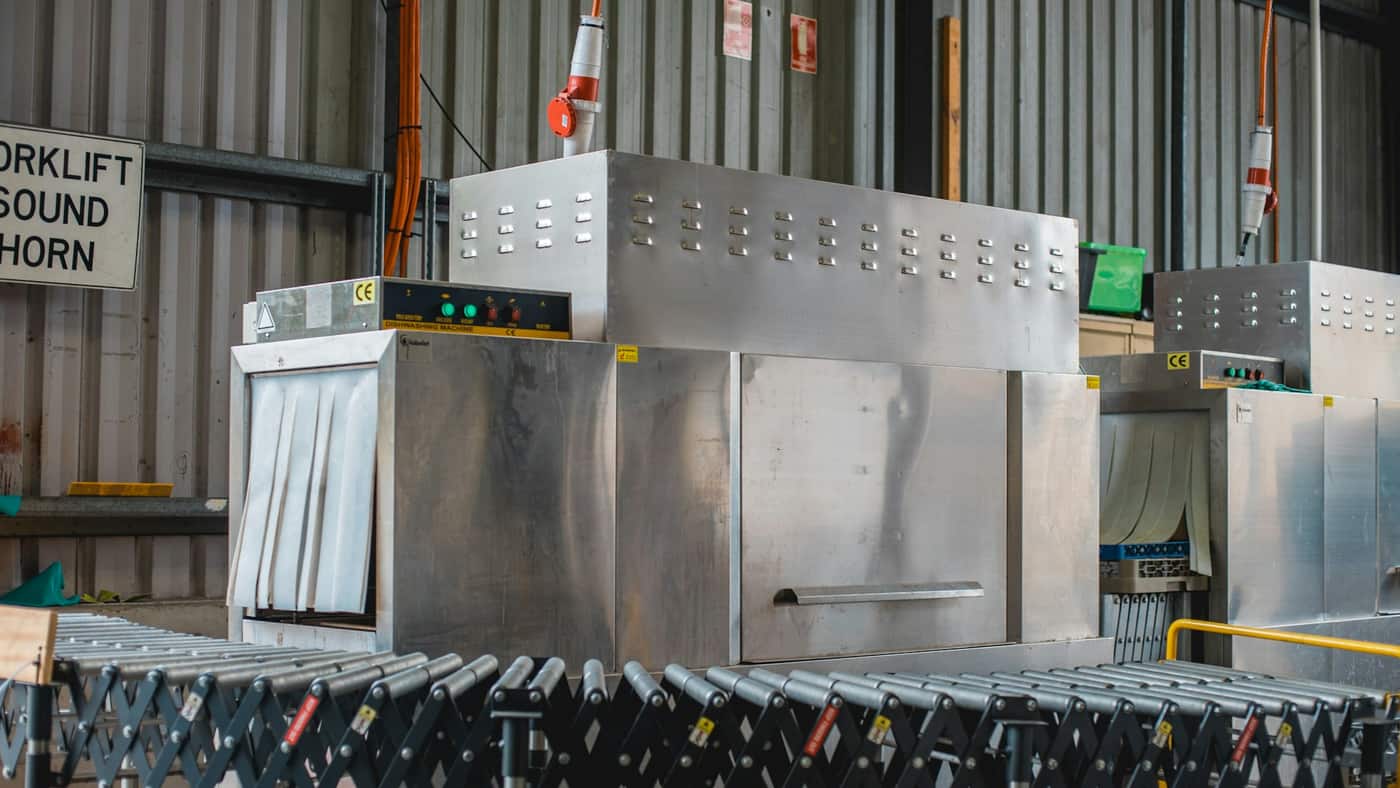
American Dish Service dishmachine repair in the Twin Cities
American Dish Service dishmachine repair in the Twin Cities: undercounter, door-type and glass machines, chemical feeders, pumps, heaters and leased units.
What fails most often on American Dish Service machines?
Wash and rinse arm clogs, worn pump seals, door switches, drain faults and tank heater scale make up most calls. On chemical-sanitizing units the feeder tubing and injector are the usual cause of a failed sanitizer test. Many of these machines are leased or supplied through a chemical company, so ownership decides who repairs them.
About American Dish Service equipment
American Dish Service sells straightforward dishmachines in undercounter, door-type and glasswasher formats. They are a common sight in churches, small restaurants, school and daycare kitchens, bars and senior-living dining rooms: places that want a dependable machine with simple controls and no touchscreen to fail. Their simplicity is the reason most failures are mechanical: a switch, a seal, a clogged arm.
Because machines in this class are often placed by a dealer or a chemical supplier, the first question is who owns it, and who is responsible when it breaks. A leased machine may be covered by the supplier's service agreement, while an owned one is yours to repair. Once that is clear, we diagnose a commercial dishwasher the usual way, and the smaller glass and undercounter units fall under glasswasher repair.
American Dish Service door-type machines
Equipment guide
Seen on this line: Door switch not closing, cycle will not start / Pump seal leaking into the motor / Arms clogged and spray pattern poor / Tank heater or booster not reaching temperature
Door-type machines in this line are built with timer-driven or simple solid-state controls, which makes diagnosis direct and keeps most repairs to one visit when the part is identified from the plate: a timer that does not advance, a door switch that does not close, a pump that does not start. Worn door seals leak spray onto the floor, and the wash pump seal slowly lets water into the motor. Wash and rinse arms clog from food and scale. On the machines that sanitize with hot water, the tank heater and the rinse booster have to deliver their rated temperature, and on chemical machines the feeders and tubing carry the load.
American Dish Service undercounter and glass machines
Equipment guide
Seen on this line: Drain pump clogged and water standing in the tub / Door switch worn, machine stops mid-cycle / Rinse aid or detergent feed not delivering
Undercounter machines are used in bars, cafes and small kitchens where the tub is small and the load is quick. Drain pumps clog on glass fragments and lemon seeds, door switches wear out, and the heater scales in hard water. The chemical feed, whether detergent, rinse aid or sanitizer, decides how clean the glass looks, so the feed tubing deserves attention before the machine is blamed. A cloudy glass on a bar is more often a feed or water-hardness issue than a failed heater, and a quick test of the rinse at the machine tells us which.
Finding the model and serial plate
The data plate is on the machine's side or back panel, and it gives the model, serial number, voltage and rated amperage. Because model naming differs between lines, copy the plate exactly instead of describing the machine by size. Note whether it sanitizes with hot water or chemical, and who supplies the detergent and sanitizer. A phone photo of the plate and the front panel is enough for us to start.
Parts
Parts for these machines come through dealers and the manufacturer, and many wear items such as door switches, pump seals, wash arms and drain components are available in OEM and aftermarket versions. Timers, relays and boards are model specific. If a chemical company installed the machine, it may own the feeders, and some repairs belong to its service plan, so confirm ownership before you buy parts.
Manufacturer warranty
If this equipment is still under the manufacturer's warranty, it should usually go through the manufacturer's authorized service network first. We are an independent company and not the manufacturer.
See also
Compared with
More warewashing brands
American Dish Service repair questions
Is my American Dish Service machine leased or owned?
Check any lease or service paperwork from your chemical or equipment supplier. If a supplier placed the machine with the detergent contract, they may own it. Look for a supplier asset tag on the cabinet. If it is yours, any qualified service company can repair it.
Why will my machine not start when I close the door?
Most often the door switch is not making contact, either from wear, a bent actuator or a misaligned door. A tripped breaker or an unfilled tank also stops the cycle. Check the breaker and the fill valve, then call us, since door switches carry line voltage.
What causes dishes to come out dirty?
Dirty dishes mean clogged wash arms, a weak pump, low water level, a detergent feed that has stopped or a tank that is too cool. Flush the arms and screens first. If dishes are still dirty, the pump or feed needs a technician.
How do I know if the sanitizing step is working?
On a chemical machine, use the correct test strip at the rinse and compare it to the required concentration. On a hot-water machine, read the final rinse temperature on the gauge while water flows. If either reading is low, stop and call before using the machine for service.
Can these machines handle hard water?
They can, but hard water shortens the life of heaters, solenoids and spray nozzles, and leaves a white film. A softener sized to the supply and a regular descale protect the machine. Scale is the single biggest preventable cause of failure.