Champion dishmachine repair in the Twin Cities
Champion door-type, undercounter and conveyor dishmachine repair in the Twin Cities: high-temp and chemical models, pumps, boosters, feeds and doors.
What fails most often on Champion dishmachines?
Door and door-switch failures, clogged wash and rinse arms, worn pump seals, drain valve faults, and chemical feed problems on low-temperature models are the usual causes. On high-temperature models the heater, booster and rinse solenoid are the common failures. A cloudy or dirty load points first to the arms and the chemical feed.
About Champion equipment
Champion Industries is based in Winston-Salem, North Carolina, and builds dishmachines across the range: undercounter, door-type, conveyor, pot and pan washers. In Twin Cities kitchens, Champion shows up in school kitchens, church and community halls, restaurants and nursing homes, and a lot of them run on a chemical supplier's dosing equipment. That mix of owned machines and supplier-placed equipment is what makes the first call about ownership as much as about the fault.
Champion sells both high-temperature and low-temperature chemical sanitizing machines, and the repair path differs between them. A high-temperature unit lives on its heater and booster, while a low-temperature unit lives on its chemical feeders, the sanitizer concentration at the rinse and the dispenser tubing. Before we take a commercial dishwasher apart, we work out which sanitizing method it uses, and we cover the smaller glasswasher models in the same family.
Champion door-type machines
Equipment guide
Seen on this line: Door not sealing or door switch stuck / Wash pump seal leaking into the motor / Rinse arms clogged with scale or food / Chemical pump tubing worn or feed not flowing
Champion door-type machines are built to run racks in a corner or straight-through layout, and the common call is a door that does not seal or a door switch that sticks. The wash pump and seal are the next-most common failure, with a seal that leaks into the motor housing if it is ignored. Wash arms and rinse arms clog at the nozzles and end caps, so the spray pattern collapses and dishes come out spotted. On high-temperature models, the booster or tank heater, the thermostat and the final rinse solenoid have to deliver rinse temperature at the manifold. On low-temperature models the chemical pump tubing and the sanitizer feed are the failures.
Champion undercounter machines
Equipment guide
Seen on this line: Drain pump clogged with glass or debris / Door switch worn and cycle interrupted / Heater scaled and tub not reaching temperature / Spray arms clogged and glass spotted
Undercounter Champion machines are the compact units used in bars, small cafes and prep kitchens, in both high-temperature and low-temperature versions. The tub is small, so the water and detergent concentration swing fast and a short supply of hot water shows up immediately. Common calls are a drain pump that clogs on glass chips and lemon seeds, a door switch that fails from daily use, and a scaled heater that no longer brings the tub to temperature. Clogged spray arms are the most common reason for cloudy glass or a wet load.
Champion conveyor machines
Equipment guide
Seen on this line: Drive motor or reducer failing under load / Rack sensor failure affecting rinse / Scrap tray clogged and pump suction starved
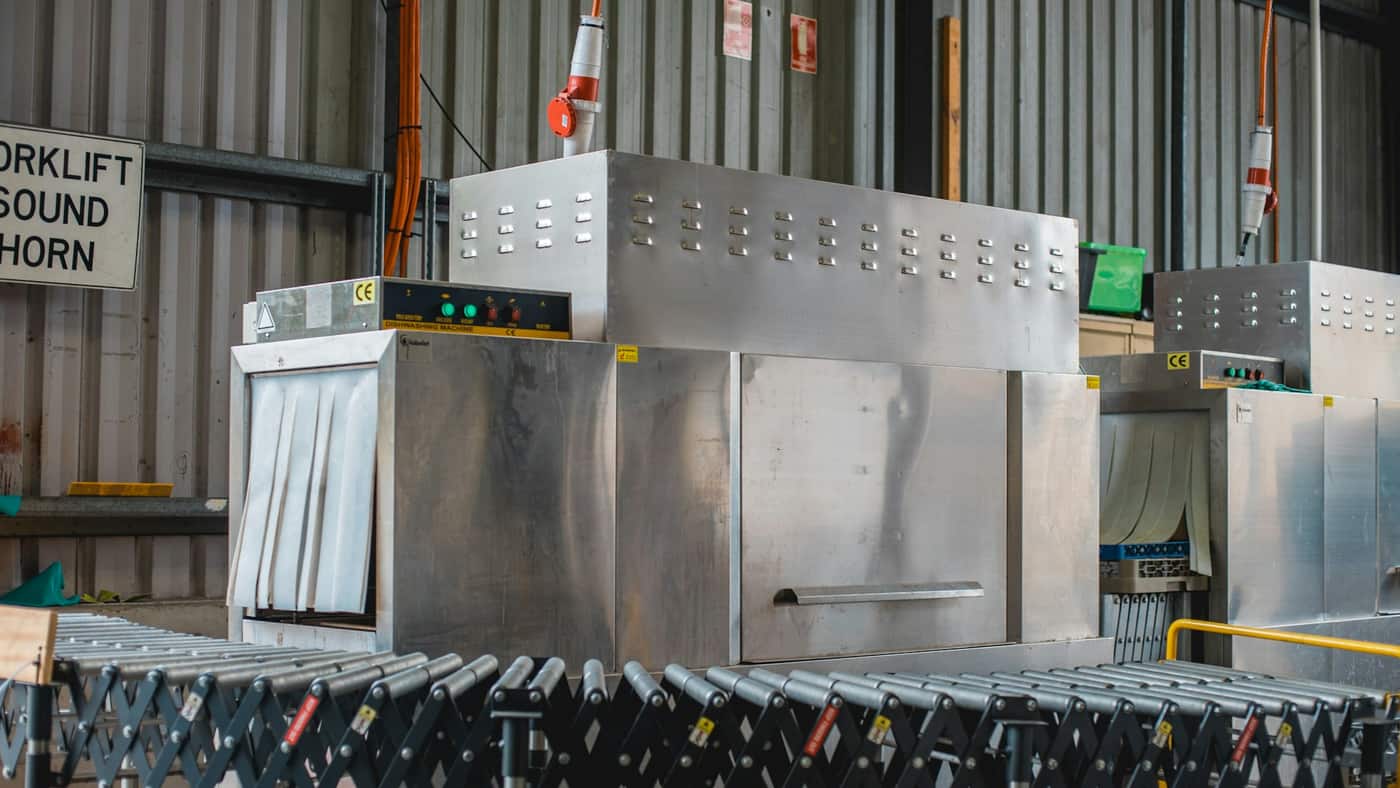
Champion conveyor machines run racks through wash, rinse and sanitize zones, and the failure patterns follow the conveyor. Drive motors and reducers wear, curtains tear, and scrap trays clog and send food into the pump. Rack sensors start the final rinse, so a failed sensor leaves rinse on or off. On a leased-chemical machine, the chemical company's dosing gear is separate from the machine, and a service call may need two parties.
Finding the model and serial plate
The rating plate is on the machine's side or front panel. Read the model number, the serial number, the electrical ratings and whether the machine is rated for high-temperature or chemical sanitizing. Record the model code exactly, since letters and digits often indicate the machine type and size. Tell us who supplies the chemical and whether the machine is owned or leased.
Parts
Champion parts are available through the manufacturer's distribution network, and wash arms, curtains, door seals, pumps and heaters are common wear items with both OEM and aftermarket choices. Control boards and chemical pumps are model specific. If the machine is leased from a chemical company, parts and labor may be the chemical company's responsibility, so check the lease before ordering anything.
Manufacturer warranty
If this equipment is still under the manufacturer's warranty, it should usually go through the manufacturer's authorized service network first. We are an independent company and not the manufacturer.
See also
Champion repair questions
How do I tell if my Champion machine is high-temperature or low-temperature?
Look at the data plate and the rinse system. A high-temperature machine lists a required rinse temperature and often an integral booster heater. A low-temperature machine lists chemical sanitizing and has a sanitizer feed line. If the plate is unclear, we read it and the plumbing on site.
My Champion machine leaves a film on glasses. What does that mean?
A film usually points to hard water, too much detergent, or a rinse aid that is not feeding. Scaled rinse nozzles also leave a film. Flush the lines and check the supply first, and call us if the film returns, because it can also mean a heater or feed problem.
Should I call Champion or a chemical company when it breaks?
If the machine is leased through a chemical supplier, the lease terms decide who services it, so start there. If you own the machine, an independent service company can repair it. If only the dosing equipment is the supplier's, the machine itself is yours.
What is the rinse flow pressure on a Champion machine?
Most commercial dishmachines call for a flowing rinse pressure near 20 psi at the machine, measured while the rinse runs. A static reading is not useful. Low pressure from a clogged strainer or an undersized line leaves dishes unsanitized, and a pressure-reducing valve may need adjusting.
How often should Champion wash arms be cleaned?
Pull and flush the arms and end caps on a regular schedule, and more often in hard water or heavy-soil kitchens. Daily scrap screen cleaning prevents most pump trouble. When nozzles will not clear with a brush, descaling the machine is the fix.