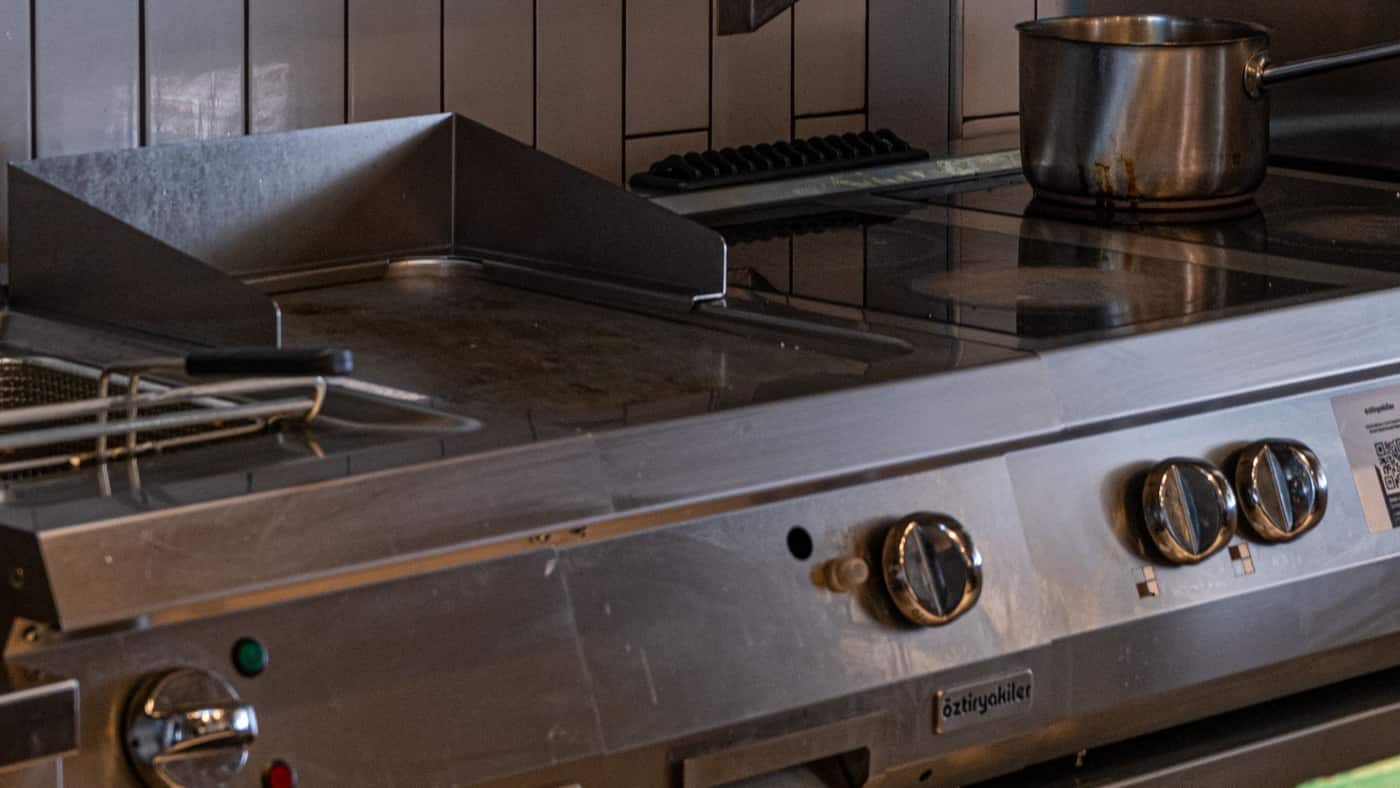
AccuTemp steamer and griddle repair in the Twin Cities
AccuTemp connectionless steamer and steam griddle repair in Minneapolis and St. Paul: scale, elements, reservoirs, pumps, sensors and control faults.
Why won't my AccuTemp steamer make steam or finish a cook cycle?
On an AccuTemp connectionless steamer the usual causes are scale on the heating element or water-level sensor, an empty or fouled reservoir, a clogged filter, a failed element, a bad door seal, or a control board fault. Low water or scale is the first thing to rule out.
About AccuTemp equipment
AccuTemp is known for equipment that rethinks how heat is made. Its Evolution steamers are boilerless and, on the connectionless versions, run from a self-contained water reservoir with built-in filtration, so there is no water line and no drain to install. Its steam griddles heat a plate with a sealed vapor chamber rather than by direct elements. A steamer without a boiler fails differently from the boiler-type commercial steamer people are used to, and a steam griddle behaves differently from a direct-heat griddle.
You see AccuTemp steamers in kitchens that wanted steam without plumbing: cafes, small restaurants, church and school kitchens, senior-living and healthcare dining, and food trucks or remodels where drains and water treatment are not practical. That also means water quality matters more, because the water in the reservoir is the water that scales the element. A steamer that is topped up with hard water and never descaled loses efficiency steadily until it fails to reach temperature.
Evolution boilerless and connectionless steamers
Equipment guide
Seen on this line: Scaled elements or level sensor, slow heat or false low water / Reservoir filter clogged or pump not moving water / Door gasket leaking steam
Heat is generated in a stainless cavity at the bottom of the cabinet, and steam is driven up a side wall to a distributor plate that jets it across the pan levels. The failure list follows from that design. Scale coats the elements and the level sensor, so the steamer heats slowly, over-fills, or reads the wrong level and stops. The reservoir filter clogs, which starves the cavity. Pumps and fill valves that move water from the reservoir fail or stick. Door gaskets harden, and steam leaks reduce performance. A steamer that blows the breaker or throws a control fault is a candidate for an element or board test. Descale on the schedule in the manual and never use an unapproved cleaner on the cavity.
Steam griddles
Equipment guide
Seen on this line: Uneven or slow plate heat / Element or thermostat failure in one zone / Plate surface gouged or fouled
An AccuTemp steam griddle uses a sealed chamber under the plate that holds a small amount of water, with elements that boil it, and the vapor carries heat evenly across the plate. That gives a flat, steady surface, and it changes how it fails. A chamber that has lost its vacuum or water charge heats unevenly or slowly and is a manufacturer-level or replacement repair rather than a field top-up. Elements, thermostats and high-limits are the usual wear parts. A grease or carbon-coated plate transfers heat poorly, and rough scraping can gouge the surface. If one zone is cold and another normal, we test the element and thermostat on that zone before we condemn the plate.
Countertop and floor-model configurations
Equipment guide
Seen on this line: Wrong element or board ordered for the voltage or size / Electronics overheating from poor airflow / Contactor wear on larger models
Evolution steamers come in countertop and floor-model sizes, with different pan counts and electrical ratings, and some versions can be connected to a water supply instead of running from the reservoir. The wiring and element requirements are different between sizes and voltages, so a replacement element or board has to match. Counter models stacked or mounted on stands sometimes lack airflow around the base, and the electronics overheat. Floor models carry more load on their contactors, and those wear. On any model, we record the fault and the cycle where it occurred, because a failure during heat-up points at the element, and one during cooking points at water or sensors.
Finding the model and serial plate
The AccuTemp serial and model plate is usually on the back or side of the cabinet, or the underside of a countertop unit, and the model string identifies the pan capacity, voltage and generation. Record the model, serial number, voltage, phase and wattage. Note whether the steamer is connectionless or connected to water, and the date of the last descale. On a griddle, record the plate size and zone count.
Parts
AccuTemp parts, including elements, level sensors, pumps, fill valves, filters, boards and gaskets, are sold through the manufacturer and distributors, and the steam and griddle components are largely proprietary to the series. Reservoir filters and gaskets are routine. We confirm the model, voltage and serial before ordering, and tell you when a sealed griddle chamber or a control board is the only repair, so you can weigh it against replacement.
Manufacturer warranty
If this equipment is still under the manufacturer's warranty, it should usually go through the manufacturer's authorized service network first. We are an independent company and not the manufacturer.
See also
Guides
More cooking equipment brands
AccuTemp repair questions
Why does my connectionless steamer take so long to heat?
Scale on the elements is the most common reason. It insulates the element from the water and the steamer works harder for less steam. A clogged reservoir filter or a failing element can look the same. Descaling on schedule prevents most of it.
Does the water I put in the steamer matter?
Yes. The reservoir water is what scales the cavity and elements, and hard water speeds scale buildup. Use the water quality the manual recommends and keep the filter changed. It is the single biggest factor in steamer life.
Why does the steamer say it is low on water when the reservoir is full?
A scaled or fouled level sensor can read wrong, or a pump or fill valve is not moving water into the cavity. Do not run it while it reads low. A technician cleans or replaces the sensor and tests the fill.
What is different about a steam griddle?
Heat comes from a sealed vapor chamber under the plate, so the surface is even and slow to cool. If a zone runs cold the cause may be an element or thermostat, or a chamber that has lost its charge, which is not a field top-up.
Is a boilerless steamer repairable on site?
Most failures are replaceable parts: elements, sensors, pumps, filters, gaskets and boards. We diagnose at the unit and give a written price for approval before we replace anything. Sealed or damaged chambers are the exception.